

If you’ve been searching for the best power tower for home workouts, you’ve probably noticed the same five or six brands popping up on every “top picks” list, usually with vague specs and no real explanation of why one model beats another. This guide fixes that. We compared frame gauge, base geometry, height adjustability, padding, and real owner feedback across six of the most popular power towers sold today, then rated each one on the criteria that actually matter once the box is open and you’re mid-set.
Quick answer: The best power tower for most home gyms is the Sportsroyals Power Tower — it balances a stable H-shaped base, six height settings, a padded and tilted armrest, and a genuinely affordable price. If you want the sturdiest possible frame for heavy or advanced training, step up to the Fitness Reality X-Class. If floor space is tight, the foldable DOBESTS Power Tower is the strongest space-saving option with the highest rated capacity in this roundup.
Below, you’ll find full reviews, a transparent rating system, workout programming for every level, and answers to the buying questions people ask most.
Table of Contents
- What Is a Power Tower?
- Benefits of Using a Power Tower
- How We Rated These Power Towers
- Product Comparison Table
- In-Depth Reviews
- Rating Comparison Table
- Feature Comparison Table
- Specification Comparison Table
- Pros & Cons Summary Table
- Best Power Tower by Use Case
- Power Tower vs. Pull-Up Bar
- Power Tower vs. Power Rack
- How to Choose the Right Power Tower
- Weight Capacity Guide
- Ceiling Height & Space Requirements
- 15 Best Exercises You Can Perform on a Power Tower
- Beginner, Intermediate & Advanced Workout Plans
- Weekly Workout Routine
- Common Buying Mistakes
- Assembly Tips
- Maintenance Tips
- Accessories Worth Buying
- Frequently Asked Questions
- Final Buying Recommendation
What Is a Power Tower?
A power tower — sometimes called a pull up dip station, home gym pull up station, or multifunction power tower — is a freestanding piece of strength equipment built around three or four bodyweight training stations in one frame: a pull-up bar on top, parallel dip bars in the middle, padded arm rests for knee and leg raises, and usually a low bar or platform for push-ups.
Unlike a doorway pull-up bar, a power tower doesn’t attach to a wall or frame, so it can go almost anywhere with a flat floor and enough ceiling clearance. Unlike a full power rack, it isn’t designed to hold a barbell — it’s purpose-built for bodyweight and light weighted calisthenics.
Most power towers on the market share the same basic anatomy:
- A base — either an H-shaped frame, a triangular folding frame, or a wide rectangular footprint — that keeps the whole unit from tipping during dynamic movement
- An adjustable or fixed pull-up bar, often with multiple grip widths (wide, neutral, narrow) built into a single bar
- Padded dip handles set at shoulder width for triceps and chest dips
- Angled arm pads and a backrest for vertical knee raises and leg raises, which take pressure off the lower back compared to hanging leg raises
- A low push-up bar or handles near the base for elevated or neutral-grip push-ups
Benefits of Using a Power Tower
A power tower earns its place in a home gym because it turns one compact footprint into four or five distinct training stations. A few reasons it consistently ranks as one of the best value pieces of equipment you can buy:
- Full upper-body and core coverage in one unit. Pull-ups and chin-ups build the lats, biceps, and grip; dips target the chest and triceps; knee raises and leg raises hit the core; push-ups round out the chest and shoulders.
- Progressive overload without a rack. Because these are compound bodyweight movements, you can scale difficulty with tempo, range of motion, or a simple weighted vest or dip belt as you get stronger — a natural progression that both the American Council on Exercise and the National Academy of Sports Medicine recommend for building relative strength before adding external load.
- Space and cost efficiency. A power tower typically costs a fraction of a cable machine or power rack and needs no wall mounting, making it realistic for garages, basements, and apartments alike. If you’re also comparing cable-based options, our breakdown of the best cable machines under $1,000 covers how that category stacks up on versatility and price.
- Joint-friendly core training. Vertical knee raises with back support reduce the lumbar strain that comes from unsupported hanging leg raises, which matters for anyone managing lower back sensitivity — something the American College of Sports Medicine flags as a common reason to prioritize supported core movements over unsupported ones early in a training program.
- No membership, no waiting for equipment. Once it’s assembled, it’s yours — no gym commute, no waiting for the dip station.
How We Rated These Power Towers
To keep this guide honest and useful, every product below was scored out of 10 across seven categories: Stability, Build Quality, Comfort, Adjustability, Weight Capacity, Ease of Assembly, and Value for Money. Those seven scores combine into an Overall Rating.
Here’s what each category actually measures:
- Stability — how much the frame shifts, rocks, or flexes during dynamic movement like kipping pull-ups or weighted dips, based on base geometry (H-frame vs. triangular vs. wide rectangular), steel gauge, and floor contact points.
- Build Quality — steel thickness, welds, powder coating, and long-term durability signals like frame warranties.
- Comfort — padding thickness, backrest and armrest angle, and grip material on the pull-up and dip handles.
- Adjustability — number of height settings, backrest positions, and handle positions, which determines how well the tower fits different user heights.
- Weight Capacity — the manufacturer’s stated maximum user weight, weighted against how consistent that number is across the brand’s own listings.
- Ease of Assembly — instruction clarity, tool requirements, and typical build time based on verified owner reports.
- Value for Money — what you get relative to street price at the time of writing.
We cross-referenced manufacturer specification sheets with independent testing notes and verified owner feedback rather than relying on marketing copy alone, and we flag inconsistencies in stated weight capacity where we found them, since this is one of the most common sources of buyer confusion in this category.
Product Comparison Table
| Power Tower | Best For | Weight Capacity | Height Range | Overall Rating |
|---|---|---|---|---|
| Sportsroyals Power Tower | Best overall / best power tower for home gym | 400–450 lbs | 64.6″–88.2″ (6 settings) | 9.0/10 |
| Fitness Reality X-Class | Heavy-duty pick / premium build | 400 lbs | 83″ fixed frame, adjustable handles | 8.8/10 |
| DOBESTS Foldable Power Tower | Small apartments / heaviest capacity | 700 lbs rated | Up to 90.6″ (8 settings) | 8.6/10 |
| RELIFE Power Tower | Best budget pick | 330–400 lbs (listing dependent) | 56″–89″ (9 settings) | 7.6/10 |
| Weider Power Tower | Families / iFIT integration | 300 lbs | 84″ fixed | 7.5/10 |
| Marcy Power Tower TC-5580 | Beginners / most compact footprint | 250 lbs | Compact fixed frame | 7.3/10 |
In-Depth Reviews
1. Sportsroyals Power Tower — Best Overall
Overview
The Sportsroyals Power Tower has become one of the most consistently recommended pull up dip stations on Amazon, and after comparing its spec sheet against five competitors, it’s easy to see why: it’s the rare adjustable power tower that doesn’t feel like it’s cutting corners to hit a low price. The “Π”-shaped steel base, 10-degree tilted arm pads, and seven-position backrest add up to a tower that fits a wider range of bodies than most fixed-height competitors.
Key Features
- H-shaped steel base with adjustable, rotatable foot covers for uneven flooring
- Six pull-up bar height settings from 64.56″ to 88.18″
- Seven backrest positions for dialing in knee raise depth
- 10-degree inward-angled arm pads designed to stop elbows sliding during leg raises
- Multiple pull-up grip positions built into a single bar
Technical Specifications
- Frame dimensions: 26.6″W x 43.2″L x 64.56″–88.18″H
- Frame material: steel alloy, thickened commercial-grade tubing
- Product weight: approximately 58 lbs
- Stated max user weight: listings range from 400–450 lbs
Build Quality
The frame uses thickened steel with a powder-coated finish, and the H-shaped base is engineered specifically to maximize ground contact area rather than relying on tubing thickness alone. It feels closer to a commercial-grade dip station than most towers in its price range.
Stability
This is where the base geometry pays off. Owners consistently report minimal wobble during strict pull-ups and dips; the main caveat surfaces during kipping or bouncing movements, where lighter frames in this class tend to show some lateral flex. For strict-form bodyweight training, stability is a strength here.
Comfort
The tilted armrests are a genuinely thoughtful detail most competitors skip — they keep your elbow from sliding outward mid-set, which matters more than it sounds like it would once you’re 15 reps into a knee raise superset. The backrest cushion adjusts across seven positions, so shorter and taller users can both get proper back support.
Adjustability
Six height settings covering 64.56″ to 88.18″ is one of the widest adjustable ranges in this roundup, and the seven-position backrest adds a second layer of fit customization that most competitors don’t offer at all.
Exercise Variety
Pull-ups, chin-ups, neutral-grip pull-ups, dips, vertical knee raises, leg raises, and push-ups are all supported, giving you roughly 10 distinct movement patterns from one frame.
Assembly Difficulty
Assembly is straightforward — comparable to following IKEA-style instructions — though a handful of owners have reported missing bolts in individual shipments, so it’s worth inventorying parts before starting.
Pros
- Excellent height and backrest adjustability for shared or family use
- Tilted arm pads noticeably improve comfort on knee raises
- Strong stability for strict-form training
- Competitive price relative to build quality
Cons
- Weight capacity is listed inconsistently across product variants (280–450 lbs depending on the listing)
- Some lateral flex during kipping or explosive movement
- A minority of buyers report quality-control issues with hardware
Best For
Anyone who wants the strongest all-around balance of stability, comfort, and adjustability without stepping up to a premium price point — including households with multiple users of different heights.
Final Verdict
The Sportsroyals Power Tower earns the top spot in this guide because it doesn’t force a trade-off between comfort, adjustability, and price the way most towers at this price do. It’s the best power tower for a home gym where more than one person will use it.

- 【Super Strong. Super Durable.】Sportsroyals power tower is a pull up bar with excellent performance and an amazing 360 lb…
- 【Full-Body Strength Training】Sportsroyals 10-in-1 pull up dip station integrates a variety of full-body strength trainin…
- 【8-level Height for Family】The pull-up machine has 8 levels of height adjustment, from 57.09 inches to 83.07 inches. The…
2. Fitness Reality X-Class — Best Heavy-Duty / Premium Pick
Overview
The Fitness Reality X-Class is built for lifters who want maximum stability over maximum adjustability. Its wide, low-slung footprint and thick steel frame prioritize a planted, commercial-gym feel over portability or a small footprint.
Key Features
- Heavy-duty powder-coated steel tube frame
- Two adjustable handlebars with foam rollers across seven mounting positions
- 3″ thick ergonomic backrest and 2.25″ thick angled forearm cushions
- Three-position adjustable stability beam for extra rigidity
- Pre-drilled holes for optional floor anchoring
Technical Specifications
- Dimensions: 63.4″L x 49″W x 83″H
- Product weight: approximately 150 lbs
- Frame material: heavy-duty powder-coated steel tubing
- Stated max user weight: 400 lbs
- Warranty: 3 years on parts, 10 years on the frame
Build Quality
At 150 lbs, this is easily the heaviest frame in this roundup — more than double the weight of the Sportsroyals or RELIFE towers — and that mass is exactly what gives it a planted, no-flex feel under load. The 10-year frame warranty is also the longest offered by any brand in this comparison, a strong build-quality signal.
Stability
The wide 49″ base combined with a low center of gravity makes this the most stable tower in this roundup for weighted dips and pull-ups. Pre-drilled anchor holes give you the option to bolt it to the floor for zero-movement training, something most adjustable towers don’t offer.
Comfort
The 3″ backrest and 2.25″ forearm cushions are noticeably thicker than the padding on every other tower reviewed here, which matters during longer knee-raise or leg-raise sets.
Adjustability
This is the trade-off: the overall frame height is fixed, so adjustability is limited to the handlebar positions (seven settings) and the leg raise handles (two positions) rather than the total tower height. Taller and shorter users share the same base height.
Exercise Variety
Fitness Reality states the X-Class supports over 20 distinct exercises, including dips, sit-ups, push-ups, pull-ups, and vertical knee raises across multiple grip angles.
Assembly Difficulty
Most owners report assembly taking about an hour with clear, comprehensive instructions, though the 150-lb frame means having a second person on hand is genuinely useful, not just convenient.
Pros
- Best-in-class stability, especially for weighted training
- Thickest padding in this comparison
- Longest frame warranty (10 years)
- Floor-anchoring option for zero-wobble training
Cons
- Fixed overall height limits fit for very short or very tall users
- Heaviest and largest footprint in this roundup, harder to move once assembled
- Premium price relative to lighter-duty competitors
Best For
Lifters who plan to add significant external weight via dip belt or weighted vest, or anyone who wants a tower that can be floor-anchored for a genuinely zero-movement pull-up and dip station.
Final Verdict
If stability under heavy or weighted load is the priority, the Fitness Reality X-Class is the heavy duty power tower to beat in this comparison — the trade-off is a fixed height and a much larger footprint.
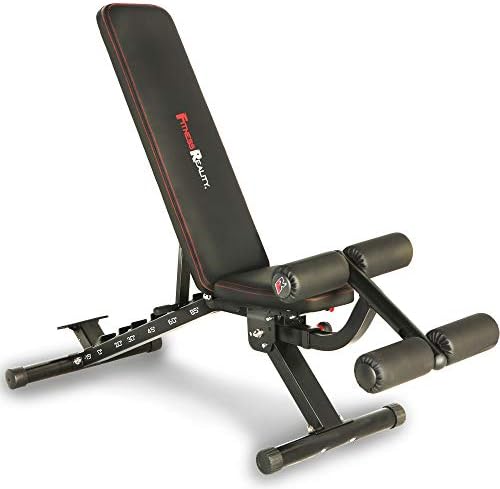
- BUILT TO LAST: Our exercise bench has an 850-pound capacity, a triangular support structure for strength, a 7-level back…
- FULL HEAD AND NECK SUPPORT: Enjoy comfortable workout sessions with a 37“ extended backrest support and a 2” soft, durab…
- FULL BODY WORKOUT: Perform a wide array of functional and strength training exercises, including but not limited to benc…
3. DOBESTS Foldable Power Tower — Best for Small Apartments & Heaviest-Rated Capacity
Overview
The DOBESTS Foldable Power Tower solves a problem the other five towers in this guide don’t even attempt to: what happens when your workout space doubles as a living space. Its triangular folding frame collapses for storage while carrying the highest stated weight capacity in this roundup.
Key Features
- Foldable triangular base — collapses without tools for storage
- Eight height adjustment levels
- Wide 36.2″ working area to prevent shoulder or shin contact
- Eight locking safety pins plus anti-slip rubber feet
- 2mm thickened steel tubing (40–50mm diameter)
Technical Specifications
- Dimensions (set up): 49.2″L x 45.7″W x 90.6″H
- Product weight: approximately 37 lbs
- Frame material: 2mm thick steel tubing
- Stated max user weight: 700 lbs (some product variants list 440 lbs — check the specific listing before buying)
Build Quality
The 2mm steel gauge is thicker than most competitors in this guide, and independent testers who loaded the frame with a 185-lb user plus a 45-lb plate reported no shifting under weighted dips and pull-ups — a meaningful stress test for a foldable design.
Stability
The triangular base is the standout engineering choice here: testers specifically noted less lateral movement during kipping pull-ups compared with traditional H-shaped bases, which tend to flex more under dynamic lateral force.
Comfort
Comfort is functional rather than plush — this tower prioritizes structural rigidity and the wide 36.2″ working area over heavily padded backrests, so tall or broad-shouldered users benefit most from the extra clearance.
Adjustability
Eight height levels is tied for the most in this roundup, with a maximum height of 90.6″ — tall enough for 6-foot-plus users to get a full dead hang without bending their knees.
Exercise Variety
Pull-ups, dips, vertical knee raises, push-ups, and inverted rows are all supported, and the front/back dual-use design lets two people train on opposite sides of the frame.
Assembly Difficulty
The pin-based folding system is genuinely tool-free once you understand the pin placement, though several testers noted the instructions for that process could be clearer — watching an assembly video before starting is worth the five minutes.
Pros
- Highest stated weight capacity in this comparison
- Genuinely foldable for apartments, garages that double as parking, or shared spaces
- Wide working area reduces shin and shoulder contact during pull-ups
- Thick 2mm steel tubing
Cons
- Stated capacity varies notably between product listings (440 lbs vs. 700 lbs) — verify the exact SKU before purchase
- Narrower pull-up bar than fixed-frame competitors, limiting very wide-grip pull-ups
- Less padding than premium fixed-frame options
- Height adjustment pins can be fiddly until you learn the alignment
Best For
Apartment dwellers, renters, or anyone whose workout area needs to double as living or parking space during the day.
Final Verdict
As a compact power tower that still delivers a genuinely heavy-duty frame, the DOBESTS is the clear pick when floor space is the deciding factor — just confirm the weight-capacity spec on the exact listing you’re buying.
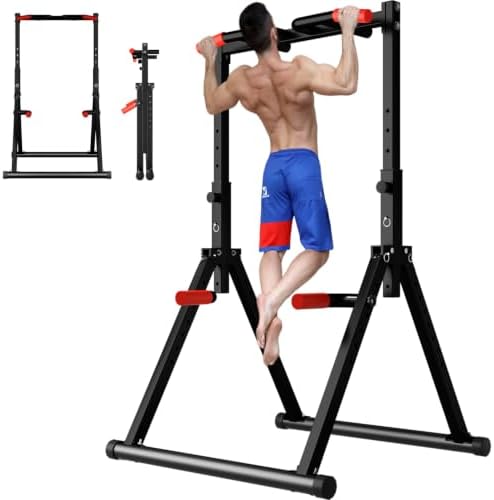
- FOLDABLE POWER TOWER DESIGN: The DOBESTS power tower folds for easier storage when not in use, making it a practical cho…
- MULTI-FUNCTION HOME WORKOUT: Designed for pull-ups, chin-ups, dips, vertical knee raises, push-ups and core training, he…
- 8-LEVEL ADJUSTABLE HEIGHT: The pull-up bar offers 8 height settings to suit different users and training routines. Adjus…
4. RELIFE Power Tower — Best Budget Pick
Overview
The RELIFE Power Tower consistently shows up in “under $150” recommendations, and for good reason: it packs the widest height-adjustment range in this guide into one of the lowest price points, without feeling like a toy.
Key Features
- Nine height adjustment levels, the most of any tower in this comparison
- PU-padded elbow cushions
- Widening anti-slip foot pads with rotatable suction cups
- Three-level handle adjustment
- Scratch-resistant steel finish
Technical Specifications
- Dimensions: approximately 35.4″L x 26.4″W x 89″H (varies slightly by version)
- Product weight: approximately 40–48 lbs
- Frame material: steel
- Stated max user weight: listings range from 330–400 lbs depending on model variant
Build Quality
The steel frame is solid for the price point, though it’s noticeably lighter-gauge than the Fitness Reality or DOBESTS towers — a reasonable trade-off at roughly two-thirds the price of the category’s mid-tier options.
Stability
Independent testers around 200 lbs reported no instability during standard pull-ups and dips, but multiple reviewers over 230 lbs noted rocking during reverse dips specifically — a useful data point if you’re training near the top of the stated capacity.
Comfort
PU elbow pads and a foam-wrapped pull-up bar keep grip comfortable, though the padding is thinner than what you’ll find on the Sportsroyals or Fitness Reality models.
Adjustability
Nine height settings from roughly 56″ to 89″ is the widest range in this entire comparison, making the RELIFE a strong pick for households where users vary significantly in height.
Exercise Variety
Pull-ups, chin-ups, triceps dips, push-ups, vertical leg raises, and knee raises are all supported through the standard four-station layout.
Assembly Difficulty
Typical assembly time runs about 40 minutes with basic tools, and most owners describe the process as straightforward for a single person.
Pros
- Widest height-adjustment range in this roundup
- Genuinely low price for a full four-station layout
- Reasonably quick assembly
- Compact footprint fits most rooms
Cons
- Frame gauge is noticeably lighter than premium competitors
- Stability trade-offs appear above roughly 200–230 lbs, especially on reverse dips
- Weight capacity claims vary between product listings
Best For
Budget-conscious buyers under roughly 220 lbs who want maximum height adjustability without paying for a heavy-duty frame they may not need.
Final Verdict
As a best dip station option for the price, the RELIFE over-delivers on adjustability — just keep expectations realistic if you’re training near its upper weight limit.

- Sturdiness and Durability, Supports up to 450 lbs, safety locknut and 4 sturdy suction cups for added stability. The Rel…
- Adjustable Handle, Features 3 levels of armrest adjustment making it suitable for people with different arm lengths. Thi…
- A Variety Of Desgins, The exercise equipment have 4 levels of backrest. 3 levels of armrest adjustment with a range of 1…
5. Weider Power Tower — Best for Families & iFIT Integration
Overview
The Weider Power Tower is one of the longest-standing names in this category, and its four-station layout — with dip and knee raise on one side, pull-up and push-up on the other — is unique enough that two people can use it simultaneously.
Key Features
- Dual-sided station layout (dip/knee raise on one side, pull-up/push-up on the other)
- Alloy steel frame construction
- Ergonomic hand grips, back padding, and elbow padding
- Includes a 30-day iFIT trial membership for guided workouts
Technical Specifications
- Dimensions: 84″H x 41″W x 57″L
- Frame material: alloy steel
- Stated max user weight: 300 lbs
Build Quality
The alloy steel frame is solid and inspires confidence for users within its 300-lb limit, though it sits a tier below the heavier-gauge steel used in the Fitness Reality and DOBESTS towers.
Stability
Most users within the weight limit report no wobble during standard use; a subset of reviewers note some shakiness as user weight approaches the 300-lb ceiling, with a non-slip mat commonly recommended as a fix.
Comfort
Ergonomic padding across the hand grips, backrest, and elbow pads is a genuine strength — reviewers consistently single out the padding as more comfortable than expected at this price.
Adjustability
This is the Weider’s main limitation: the pull-up bar height is fixed, not adjustable, so very short or very tall users may not get an ideal fit.
Exercise Variety
The four stations cover pull-ups, chin-ups (multiple grip widths), triceps and chest dips, vertical knee raises, and push-ups — a genuinely complete station layout despite the fixed height.
Assembly Difficulty
Assembly requires basic tools and detailed included instructions; most owners complete it in under an hour.
Pros
- Genuinely comfortable padding for the price
- Dual-sided design allows two people to train at once
- Includes a 30-day iFIT trial for guided programming
- 90-day parts and labor warranty
Cons
- Fixed pull-up bar height — no adjustability
- Lower 300-lb weight capacity than most competitors here
- Some reports of wobble near the weight limit
Best For
Families or households where two people of roughly average height will share the tower, and where guided workout programming (via the iFIT trial) adds value.
Final Verdict
The Weider remains a dependable, comfortable option if its fixed height suits your household — it’s more of a “best power tower for home gym” value pick than a heavy-duty or highly adjustable one.

- 100% Matte
- FULL-BODY HOME WORKOUTS: Perform 70+ exercises for strength, cardio, stretching, Pilates, yoga and HIIT while targeting …
- 8 LEVELS OF BODYWEIGHT RESISTANCE: Adjust the incline to increase or decrease resistance and tailor each workout to your…
6. Marcy Power Tower TC-5580 — Best Compact Pick for Beginners
Overview
The Marcy Power Tower TC-5580 is the smallest-footprint, lowest-capacity tower in this guide, which makes it a deliberately different pick: this is the compact power tower for someone prioritizing floor space and a lower price point over maximum capability.
Key Features
- Multi-grip pull-up bar for varied hand positioning
- Triceps dip station
- Base bar usable for elevated push-ups
- Sleek, space-saving frame design
- Powder-coated 14-gauge steel finish
Technical Specifications
- Dimensions: approximately 54″L x 42″W x 89″H (TC-3515 variant); the TC-5580 has a smaller footprint
- Frame material: 14-gauge powder-coated steel
- Stated max user weight: 250 lbs
- Warranty: 2 years limited
Build Quality
The 14-gauge steel is adequate for its intended user weight range but is the lightest-duty frame in this comparison, consistent with its position as the most compact and most affordable option.
Stability
The smaller footprint trades some stability for space savings — this tower is best suited to strict-form training rather than dynamic or kipping movement.
Comfort
Comfort is basic but functional; padding is thinner than on the Sportsroyals, Fitness Reality, or Weider models.
Adjustability
Adjustability is limited on the base TC-5580 model — several reviewers specifically note the multi-grip bar is better suited to chin-ups than true wide-grip pull-ups, and shorter users may find dead-hang clearance tight.
Exercise Variety
Triceps dips, multi-grip chin-ups/pull-ups, and elevated push-ups are all supported, though the exercise range is narrower than the four- and five-station towers above it.
Assembly Difficulty
The compact frame makes assembly faster and easier than the larger towers in this guide, typically completed solo in under an hour.
Pros
- Smallest footprint in this roundup — genuinely apartment-friendly
- Lower price point than most competitors
- Straightforward, quick assembly
- Two-year manufacturer warranty
Cons
- Lowest weight capacity in this comparison (250 lbs)
- Limited clearance for tall users during pull-ups
- Least adjustable of the six towers reviewed
- Thinner padding than mid-tier and premium options
Best For
Beginners, lighter-weight users, or anyone whose absolute top priority is minimizing footprint and price over capacity or adjustability.
Final Verdict
The Marcy TC-5580 is a reasonable entry point if you’re new to bodyweight training and want the smallest possible commitment of space and budget — just plan to upgrade if you outgrow the 250-lb capacity or want more adjustability.
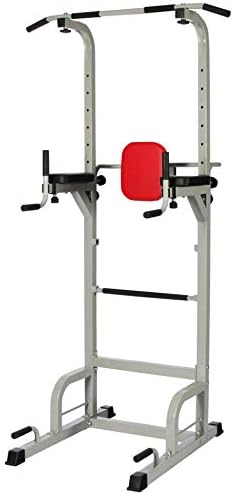
- Heavy Duty – Made from high quality steel, designed to support a maximum user weight of 400 lbs. Heavy duty square steel…
- Multi-Function – This multi-use station provides you with the ability to strengthen your upper body and core whenever yo…
- Adjustable – The power tower is completely adjustable to provide a confirmable workout and different muscle targets. The…
Rating Comparison Table
| Product | Stability | Build Quality | Comfort | Adjustability | Weight Capacity | Ease of Assembly | Value | Overall |
|---|---|---|---|---|---|---|---|---|
| Sportsroyals Power Tower | 9.0 | 8.8 | 9.2 | 9.5 | 8.5 | 7.0 | 9.3 | 9.0 |
| Fitness Reality X-Class | 9.3 | 9.4 | 9.0 | 8.0 | 8.5 | 8.0 | 8.0 | 8.8 |
| DOBESTS Foldable | 8.7 | 9.0 | 7.8 | 8.5 | 9.7 | 8.3 | 8.5 | 8.6 |
| RELIFE Power Tower | 7.0 | 7.2 | 7.0 | 8.5 | 6.8 | 8.0 | 9.0 | 7.6 |
| Weider Power Tower | 7.5 | 7.8 | 7.5 | 5.0 | 7.0 | 7.5 | 8.7 | 7.5 |
| Marcy TC-5580 | 7.3 | 7.5 | 7.0 | 6.0 | 6.0 | 8.5 | 8.0 | 7.3 |
Feature Comparison Table
| Product | Adjustable Height | Adjustable Backrest | Foldable | Multi-Grip Pull-Up | Push-Up Station | Anchor Points |
|---|---|---|---|---|---|---|
| Sportsroyals | Yes (6 levels) | Yes (7 positions) | No | Yes | Yes | No |
| Fitness Reality X-Class | No (fixed) | No | No | Yes | Yes | Yes |
| DOBESTS Foldable | Yes (8 levels) | No | Yes | Yes | Yes | No |
| RELIFE | Yes (9 levels) | No | No | Yes | Yes | No |
| Weider | No (fixed) | No | No | Yes | Yes | No |
| Marcy TC-5580 | No (fixed) | No | No | Yes | Yes | No |
Specification Comparison Table
| Product | Assembled Dimensions | Product Weight | Frame Material | Warranty |
|---|---|---|---|---|
| Sportsroyals | 26.6″W x 43.2″L x 64.6–88.2″H | ~58 lbs | Steel alloy | Standard |
| Fitness Reality X-Class | 63.4″L x 49″W x 83″H | ~150 lbs | Powder-coated steel | 3 yr parts / 10 yr frame |
| DOBESTS Foldable | 49.2″L x 45.7″W x 90.6″H | ~37 lbs | 2mm steel tubing | Standard |
| RELIFE | ~35.4″L x 26.4″W x 89″H | ~40–48 lbs | Steel | Standard |
| Weider | 84″H x 41″W x 57″L | Not listed | Alloy steel | 90 days |
| Marcy TC-5580 | Compact (see TC-3515: 54″x42″x89″) | Not listed | 14-gauge steel | 2 years |
Pros and Cons Summary Table
| Product | Biggest Pro | Biggest Con |
|---|---|---|
| Sportsroyals | Best all-around comfort and adjustability for the price | Capacity claims vary by listing |
| Fitness Reality X-Class | Best-in-class stability and 10-year frame warranty | Fixed overall height |
| DOBESTS Foldable | Folds flat; highest rated capacity | Narrower pull-up bar width |
| RELIFE | Widest height-adjustment range | Lighter-gauge frame than premium picks |
| Weider | Comfortable padding; dual-sided use | No height adjustability |
| Marcy TC-5580 | Smallest footprint, easiest assembly | Lowest weight capacity (250 lbs) |
Best Power Tower by Use Case
Best Power Tower for Beginners
The Marcy TC-5580 or RELIFE Power Tower are the easiest entry points — both are quick to assemble, take up less space, and cost less, which matters if you’re not yet sure how heavily you’ll use it. The RELIFE’s wider height range gives it a slight edge if more than one person in the household will use it.
Best Power Tower for Heavy Users
The Fitness Reality X-Class is the strongest pick for heavier or more advanced lifters thanks to its wide, low base, thick steel frame, and floor-anchoring holes. The DOBESTS, with its stated 700-lb capacity on the higher-rated listing, is a close second if you also need it to fold away.
Best Power Tower for Tall Users
The DOBESTS Foldable Power Tower reaches the tallest maximum height in this comparison at 90.6″, giving 6-foot-plus users room for a full dead hang. The Sportsroyals, topping out at 88.18″, is a strong second choice with better padding.
Best Power Tower for Small Apartments
The DOBESTS Foldable Power Tower is purpose-built for this scenario — its triangular frame collapses without tools, and at 37 lbs it’s the lightest tower in this roundup to move and store. The Marcy TC-5580 is the runner-up if you don’t need it to fold away entirely, just take up less floor space while assembled.
Best Budget Pick
The RELIFE Power Tower delivers the most height adjustability and a full four-station layout at the lowest realistic price point in this comparison.
Best Premium Pick
The Fitness Reality X-Class justifies its higher price with the thickest padding, heaviest frame, longest warranty, and highest stability ceiling in this guide.
Power Tower vs. Pull-Up Bar
A doorway or wall-mounted pull-up bar is cheaper and takes up essentially no floor space, but it only does one exercise well. A power tower costs more and needs a dedicated footprint, but it replaces four or five separate pieces of equipment — dip station, knee raise station, push-up handles, and pull-up bar — with one purchase. If your workout space genuinely can’t spare 4–5 square feet of floor, a pull-up bar paired with a separate freestanding dip stand may be the more realistic choice; if you can spare that footprint, a power tower is almost always the better value per exercise unlocked.
Power Tower vs. Power Rack
A power rack (or squat rack) is built to hold a loaded barbell for squats, bench presses, and rack pulls, and most include a pull-up bar and can accept a dip attachment — but a rack costs significantly more, needs more ceiling and floor clearance, and is overkill if your training is primarily bodyweight-based. A power tower is purpose-built for bodyweight and lightly weighted calisthenics at a fraction of the price and footprint. Many serious home gym builders eventually own both; if barbell training is on your roadmap, it’s worth planning your space around a rack from the start rather than squeezing one in later. If you’re also weighing adjustable dumbbells as part of that broader home gym build, our guide to the best adjustable dumbbells for a home gym covers how that category fits alongside bodyweight equipment like a power tower.
How to Choose the Right Power Tower
Work through these five questions before you buy:
- What’s your actual body weight, including any planned added load? Choose a tower rated comfortably above your training weight — see the capacity guide below for specific margins.
- How much floor space and ceiling height do you have? Measure both before shopping, not after the box arrives.
- Will more than one person use it? If so, prioritize height and backrest adjustability (Sportsroyals or RELIFE) over a fixed-frame design.
- Do you need it to fold away or move? If yes, the DOBESTS is the clear standout in this comparison.
- How much do you value stability under dynamic movement versus a lower price? Heavier steel gauge and wider bases (Fitness Reality) cost more but flex less under kipping or weighted movement.
Beyond those five questions, it’s worth thinking about how your training will evolve over the next year or two. Someone starting with assisted or negative pull-ups today may be doing weighted dips with a 25-lb plate within six months — in that case, it makes sense to buy slightly above your current needs rather than upgrading twice. On the other hand, if you know your training will stay strictly bodyweight and your space is genuinely limited, there’s no benefit in paying for a 700-lb rated frame you’ll never stress-test. Matching the tower’s strengths to your actual trajectory, not just your current fitness level, tends to produce the best long-term buying decision in this category.
Weight Capacity Guide
Manufacturer weight capacity numbers are usually tested under static or near-static load, not dynamic movement. As a practical buying rule:
- If your body weight plus any added weight vest or dip belt load is within 60% of the stated capacity, you have solid margin for strict-form training.
- If you’re above 80% of stated capacity, expect more frame flex, particularly during dips and kipping pull-ups, and prioritize the heavier-gauge steel options in this guide (Fitness Reality X-Class or DOBESTS).
- Treat capacity numbers from third-party or unofficial listings with some skepticism — as this guide’s specification table shows, the same brand’s stated capacity can vary by 100+ lbs depending on the exact listing or model revision. Always check the specification sheet on the exact SKU you’re purchasing.
Ceiling Height & Space Requirements
Most power towers stand between 83″ and 90.6″ fully assembled, so you’ll generally want at least 8 feet of ceiling clearance to comfortably use the pull-up bar without your head brushing the ceiling mid-rep, plus a few extra inches if you plan to add a jump or kip. Floor footprint ranges from roughly 3.5 x 4.5 feet up to 4 x 4.5 feet depending on the model, and most towers need clearance on at least two sides — one to face the unit for pull-ups and dips, and one behind for stepping onto the knee-raise pads. Measure your actual ceiling height and available floor space with a tape measure before ordering; a tower that looks compact in product photos can still feel cramped once your knees bend mid-set.
15 Best Exercises You Can Perform on a Power Tower
- Pull-ups (wide grip) — lats, upper back
- Chin-ups (underhand grip) — biceps, lats
- Neutral-grip pull-ups — biceps, brachialis, reduced shoulder strain
- Negative pull-ups — eccentric strength building for beginners
- Triceps dips — chest, triceps, shoulders
- Chest-leaning dips — greater chest emphasis
- Vertical knee raises — lower abs, hip flexors
- Vertical leg raises (straight leg) — advanced core progression
- Windshield wipers (on the arm pads) — obliques
- Hanging leg raises (from the pull-up bar) — full core
- Elevated push-ups (using the base bar) — chest, triceps, shoulders
- Decline push-ups (feet on the arm pads) — upper chest emphasis
- Inverted rows (using the low bar, if included) — mid-back, biceps
- L-sits (on the dip bars) — core, hip flexors, isometric strength
- Muscle-up progressions (advanced users only, on towers with sufficient clearance) — full-body explosive pulling power
Beginner, Intermediate & Advanced Workout Plans
Beginner Workout Plan (2–3x per week)
- Negative pull-ups: 3 sets of 5
- Assisted or bent-knee dips: 3 sets of 8
- Vertical knee raises: 3 sets of 10
- Elevated push-ups: 3 sets of 10
- Rest 60–90 seconds between sets
Intermediate Workout Plan (3x per week)
- Pull-ups: 4 sets of 6–8
- Chest dips: 4 sets of 8–10
- Vertical leg raises: 3 sets of 12
- Decline push-ups: 3 sets of 12
- Chin-ups: 3 sets of 6–8
- Rest 60–75 seconds between sets
Advanced Workout Plan (4x per week, split by pull/push emphasis)
- Weighted pull-ups (dip belt or vest): 5 sets of 5
- Weighted dips: 5 sets of 5
- Muscle-up progressions: 4 sets of 3
- Hanging leg raises: 4 sets of 12
- L-sits: 4 sets, max hold
- Rest 90–120 seconds between heavy sets
Weekly Workout Routine
| Day | Focus |
|---|---|
| Monday | Pull-focused (pull-ups, chin-ups, inverted rows) |
| Tuesday | Push-focused (dips, push-ups) |
| Wednesday | Rest or light core work |
| Thursday | Full-body (pull-ups, dips, leg raises superset) |
| Friday | Core-focused (leg raises, windshield wipers, L-sits) |
| Saturday | Optional light session or mobility work |
| Sunday | Rest |
Common Buying Mistakes
- Not measuring ceiling height first. A tower that’s 88″ tall needs real clearance above it, especially if you plan to jump into your pull-ups.
- Buying based on the lowest advertised weight capacity number without checking the specific listing. As shown in this guide’s specification tables, stated capacity for the same product line can vary by more than 100 lbs between listings.
- Ignoring backrest and armrest adjustability. A fixed-height tower can be genuinely uncomfortable for users outside the “average” height range it was designed around.
- Underestimating floor footprint. Most towers need clearance on two sides, not just the space the frame itself occupies.
- Assuming all “power towers” include the same stations. Some fixed-frame budget models skip the push-up bar or offer a narrower dip width — check the station list, not just the price.
Assembly Tips
- Inventory every bolt, washer, and bracket against the parts list before starting — missing hardware is one of the most common complaints across every brand in this guide.
- Assemble on the flooring you plan to use long-term; moving a fully built tower, especially the 150-lb Fitness Reality X-Class, is a two-person job.
- Use a power drill with the correct bit size rather than the included hand tools where possible — most reviewers report this cuts assembly time significantly.
- Tighten all bolts to snug, then do a second full pass after your first workout, since new hardware commonly settles slightly under initial load.
- For foldable models like the DOBESTS, dry-run the fold-and-unfold mechanism once before your first workout so you understand the pin alignment under no load.
Maintenance Tips
- Re-check and re-tighten all bolts monthly, or immediately if you notice new creaking or movement.
- Wipe down padding and grips after each session — sweat accelerates wear on foam padding and vinyl backrests.
- Inspect welds and joints periodically for surface rust if the tower is stored in a garage or outdoors.
- Lubricate height-adjustment pins lightly if they become difficult to move.
- Store foldable models folded when not in use to reduce stress on hinge points over time.
Accessories Worth Buying
- A dip belt to add external weight for weighted pull-ups and dips once bodyweight reps stop being challenging
- Gymnastic or lifting grips to reduce hand fatigue during high-volume pull-up sessions
- A non-slip gym mat underneath the base, especially for lighter-gauge towers or hard flooring
- Resistance bands for assisted pull-ups while building toward strict reps
- A foldable weight bench if you’re expanding into weighted accessory work alongside your power tower — see our guide to the best foldable weight benches for small spaces for options that won’t crowd your existing setup
Frequently Asked Questions
What is the best power tower for home workouts overall? Based on this comparison, the Sportsroyals Power Tower offers the strongest overall balance of stability, comfort, and adjustability for most home gym users, while the Fitness Reality X-Class is the better choice if stability under heavy load is the top priority.
How much weight can a power tower hold? Stated capacity varies from roughly 250 lbs on compact models up to 700 lbs on heavy-duty foldable designs, though real-world safe use is generally most reliable when your training weight stays under about 60–70% of the stated maximum.
Do I need to bolt a power tower to the floor? Most freestanding power towers don’t require floor anchoring for strict-form bodyweight training, but models with pre-drilled anchor holes, like the Fitness Reality X-Class, offer that option for extra stability during weighted or dynamic movement.
Can a power tower replace a full home gym? It can cover pull-ups, dips, push-ups, and core work effectively, but it won’t replace barbell-based strength training like squats or bench presses — pairing it with adjustable dumbbells or a cable machine rounds out a more complete setup.
How much ceiling height do I need for a power tower? Plan for at least 8 feet of clearance, since most towers stand between 83″ and 90.6″ tall and you’ll want a few extra inches above the bar for a full range of motion.
Are foldable power towers as sturdy as fixed-frame models? The best foldable designs, like the DOBESTS with its triangular base, can match or exceed fixed H-frame towers on stability, but this varies significantly by brand and steel gauge, so check independent stability feedback rather than assuming all foldable models perform equally.
What’s the difference between an H-base and a triangular base power tower? An H-shaped base maximizes side-to-side ground contact and tends to resist forward-backward tipping well, while a triangular base often provides better resistance to lateral (side-to-side) movement during kipping or explosive pulling — the “better” choice depends on your training style.
Is a power tower good for beginners? Yes — most towers support assisted or negative-rep progressions for pull-ups and dips, making them genuinely useful from a complete beginner level through advanced weighted calisthenics.
How long does it take to assemble a power tower? Most models in this guide took owners between 30 minutes and an hour with basic hand tools; heavier frames like the Fitness Reality X-Class can take closer to an hour and are easier with a second person, while compact models like the Marcy TC-5580 tend to go faster.
Can two people use the same power tower? Dual-sided designs like the Weider Power Tower are built specifically so one person can use the pull-up and push-up side while another uses the dip and knee-raise side simultaneously; most other towers are single-user at a time, though adjustable height and backrest settings still make it practical to share across a household.
Do power towers damage flooring? Most include rubber or anti-slip foot pads that protect flooring under normal use, but a heavier frame combined with a hard surface like tile or concrete benefits from a dedicated gym mat underneath, both to protect the floor and to add a small amount of extra grip and stability.
What’s the difference between a power tower and a dip station? A dedicated dip station typically offers only parallel dip bars, sometimes at a single fixed height, while a power tower combines dip bars with a pull-up bar, knee-raise pads, and usually a push-up station in one frame — meaningfully more exercise variety for a modest increase in footprint and price.
Should I buy a power tower or build a full home gym with a squat rack first? If your training is primarily bodyweight-focused — pull-ups, dips, core work — a power tower delivers more training value per dollar than a squat rack would for that same goal. If you also want to squat, bench, or deadlift with a barbell, budget for a rack as the centerpiece and treat the power tower as a complementary addition rather than a replacement.
Final Buying Recommendation
If you only take one thing from this guide: match the tower to how you’ll actually train, not just the lowest price or the highest weight-capacity number on the box. For most home gyms, the Sportsroyals Power Tower hits the best overall balance of comfort, adjustability, and price. If you’re training heavy or want maximum stability, move up to the Fitness Reality X-Class. If space is your real constraint, the DOBESTS Foldable Power Tower is the strongest pick in this roundup for apartments and shared spaces. And if you’re just getting started and want the smallest possible commitment, the RELIFE or Marcy TC-5580 are reasonable, low-risk entry points.
Whichever you choose, measure your ceiling and floor space first, check the weight capacity on the exact listing you’re buying, and give the bolts a second tightening pass after your first real workout.
Some links on this page are affiliate links. If you make a purchase through them, LiftQube may earn a small commission at no extra cost to you. We only recommend products we believe offer genuine value based on our research and evaluation.

Pingback: Best Rowing Machine for Apartments in 2026: Quiet, Compact & Foldable Picks for Small Spaces - LiftQube – Home Gym Equipment Reviews & Buying Guides
Pingback: REP AB-3000 2.0 Review: Is This the Best Adjustable Bench for a Home Gym in 2026? - LiftQube – Home Gym Equipment Reviews & Buying Guides