

If you’ve spent any time shopping for a cable machine for your home gym, you’ve probably noticed the same frustrating pattern: the “best” lists are dominated by $2,000–$4,000 functional trainers, followed by a vague “or if you’re on a budget, try…” afterthought with no real detail behind it.
That’s the gap this guide fills. Every machine below is realistically available for under $1,000 (some well under), and every spec — weight stack size, cable ratio, footprint, warranty — is pulled directly from the manufacturer’s own listing, not estimated. Where prices fluctuate (and with fitness equipment, they always do), we’ve noted the typical range instead of a single number that will be wrong by the time you read this.
Whether you’re outfitting a one-car garage, a spare bedroom, or a basement corner, this article will help you find a budget cable machine that won’t feel like a compromise.
Quick Verdict
If you only read one section, read this one.
- Best Overall Value: Titan Fitness Functional Trainer — dual 200 lb stacks, 2:1 ratio, and genuine commercial-style build for around $999, making it the best all-around best functional trainer under $1000.
- Best Selectorized Option (biggest stack): XMark Functional Trainer — dual 230 lb stacks, the heaviest selectorized resistance on this list.
- Best Plate-Loaded Option: Valor Fitness BD-61 Cable Crossover Station — reuses the bumper plates you already own instead of paying for a built-in stack.
- Best for Small Home Gyms: Body-Solid Powerline PFT50 — a single, compact tower with a lifetime frame and pulley warranty.
- Best for Beginners: Marcy MWM-990 — the lowest entry price on this list for a true dual-stack machine.
- Best for Garage Gyms (space-saving): Mikolo Wall-Mounted Cable Crossover Machine — bolts to a wall or stud frame and gives back your floor space.
If you want the short answer: for most people building a serious home gym on a real budget, the Titan Fitness Functional Trainer is the smartest single purchase on this list. If you already own bumper plates, the Valor BD-61 will save you real money over time.
Quick Comparison Table
| Machine | Type | Weight Stack | Cable Ratio | Footprint (W x D) | Height | Typical Price* |
|---|---|---|---|---|---|---|
| Titan Fitness Functional Trainer | Selectorized, dual stack | 2 x 200 lb (400 lb total) | 2:1 | 64″ x 44″ | 82″ | ~$949–$1,099 |
| XMark Functional Trainer (230 lb) | Selectorized, dual stack | 2 x 230 lb (460 lb total) | 2:1 | ~55″ x 48″ | 84″ | ~$999–$1,199 |
| Valor Fitness BD-61 Cable Crossover | Plate-loaded | User-supplied (up to 400 lb capacity) | 1:1 | ~48″ x 46″ | ~83″ | ~$599–$899 |
| Body-Solid Powerline PFT50 | Selectorized, single tower | 210 lb | 4:1 (approx. 52 lb working resistance at max) | ~48″ x 44″ | ~83″ | ~$699–$899 |
| Marcy MWM-990 | Selectorized, dual stack | 2 x 150 lb (300 lb total) | 2:1 | ~48″ x 41″ | ~83″ | ~$539–$650 |
| Mikolo Wall-Mounted Cable Crossover | Selectorized, wall-mounted | 200–210 lb (single or dual pulley) | 2:1 | ~30″ x 20″ (wall-mounted) | ~78″–83″ | ~$485–$699 |
*Prices are approximate as of 2026 and change frequently with sales, shipping promotions, and retailer stock. Always confirm the current price on the manufacturer’s site before buying.
How We Selected These Machines
We didn’t just reshuffle a generic “top 10” list. Every machine included here had to clear four filters:
- Verifiable specs. We only included machines with cable ratio, weight stack size, and dimensions published directly by the manufacturer — no guessing based on stock photos.
- Real-world price ceiling. Every pick is realistically obtainable under $1,000 (including a couple that regularly dip well below that), factoring in typical sale pricing, not just a rare doorbuster.
- Build quality signals. We weighted steel gauge, pulley material (aluminum vs. plastic-heavy nylon), cable coating, and warranty length, since these are the components that fail first on cheap machines.
- Coverage across use cases. Rather than six versions of the same “dual-stack functional trainer,” we deliberately included a plate-loaded option, a wall-mounted option, a single-tower compact option, and a beginner-priced option, because “best” depends heavily on your space and goals.
This guide follows a straightforward, honest-content standard: we cite manufacturer specifications directly, we flag where sources disagree, and we tell you who should skip a product just as clearly as who should buy it. For general background on why cable-based resistance training is effective, <a href=”https://www.acefitness.org/continuing-education/certified/may-2019/7273/the-forgotten-benefits-of-machine-training/” target=”_blank” rel=”nofollow noopener”>ACE Fitness has a solid explainer on cable pulley machines and functional strength patterns</a> that’s worth a read if you’re new to this style of training.
Individual Reviews
1. Titan Fitness Functional Trainer
Best Overall Value
Titan built this machine to sit right at the edge of “budget” and “serious equipment,” and it mostly succeeds. It’s the closest thing on this list to what you’d find in a commercial gym, minus the $2,500+ price tag.
Real-world use case: This is the machine for someone who wants one purchase to cover lat pulldowns, cable rows, chest flys, tricep pressdowns, cable curls, face pulls, and loaded carries/lunges with horizontal resistance — without needing to also buy a separate rack or bench right away.
Build quality: Heavy-gauge steel frame with a wide stance base for stability. At 672 lbs assembled, it plants itself; users don’t report the tipping or rocking that plagues lighter budget units.
Pulley smoothness: Uses a red-anodized aluminum pulley system rather than the plastic pulleys common at this price point — a meaningful upgrade for long-term smoothness and reduced cable fraying.
Cable ratio: 2:1. Setting the pin to 100 lbs gives you roughly 50 lbs of actual resistance, which means smoother, less jerky starts on lighter, higher-rep accessory work.
Resistance: Dual 200 lb stacks (400 lb combined), adjustable in 10 lb increments.
Attachments included: Tricep rope, ankle strap, D-handle grips, D-handle straps, long bar, short bar, and triangle D-row — a genuinely complete starter kit.
Assembly difficulty: This is the machine’s weakest point. Reviewers consistently describe assembly as lengthy (plan for 4–6+ hours with two people) due to the number of steel components and the weight stack installation. It’s not difficult so much as long.
Warranty: Titan backs the frame and components with a standard limited warranty; check the current terms on titan.fitness, as coverage periods are occasionally updated.
Footprint: 64″ W x 44″ D base, 82″ tall. Titan recommends 8–10 feet of open training space in front of the machine for full range of motion on cable crossovers and rows.
Ceiling height needed: A standard 8-foot ceiling works, but tall users doing overhead pulldown variations should measure their reach before buying — this is one of the shorter functional trainers on the market by design, which is actually a plus for basements.
Pros
- Commercial-grade 2:1 ratio and aluminum pulleys at a sub-$1,000 price
- 400 lb combined resistance is enough for most intermediate and advanced lifters
- Comprehensive attachment package included in the box
- Stable, low-flex frame even under heavy loaded pulls
- Fits under lower ceilings than most full-size functional trainers
Cons
- Long, involved assembly process
- Weight stacks are fixed — you cannot add plates beyond 200 lbs per side
- 64″ width needs a genuinely open wall or corner, not a tight closet space
- Some users report minor stack shake at the top end of the weight range
Key Specifications
| Spec | Detail |
|---|---|
| Weight Stack | 2 x 200 lb (400 lb total), 10 lb increments |
| Cable Ratio | 2:1 |
| Pulley Positions | 20 vertical height positions |
| Frame Material | Heavy-gauge steel |
| Pulley Material | Red-anodized aluminum |
| Product Weight | 672 lbs |
| Footprint | 64″ W x 44″ D |
| Height | 82″ |
Exercises You Can Perform
Lat pulldowns, seated/standing cable rows, cable chest flys, cable crossovers, tricep pressdowns, cable bicep curls, face pulls, cable woodchops, single-arm rows, cable lunges and squats with horizontal resistance, pull-ups (via the integrated bar), and dozens of unilateral accessory movements.
Space Requirements
Minimum practical footprint: roughly 8 ft wide x 10 ft deep once you account for full arm extension during crossovers and rows. It fits comfortably in a single-car garage bay alongside a bench.
Who Should Buy It
Intermediate to advanced home gym owners who want the closest experience to a commercial functional trainer without paying commercial prices, and who have a genuinely open wall or corner to dedicate to it.
Who Should Skip It
Anyone in a tight apartment or shared space who needs something foldable or wall-mounted — this is a large, permanent, freestanding unit. Also skip it if you already own a full set of bumper plates and would rather not pay for a built-in stack (see the Valor BD-61 instead).
Value for Money Rating
4.6 / 5 — the best resistance-per-dollar and build-quality-per-dollar ratio on this list.
Upgrade Options
If you later want more resistance, Titan and third-party sellers offer plate-loaded functional trainers as a step up, though at that point you’re looking at a different machine rather than an add-on.
Final Verdict: If you can only buy one cable machine and want the safest, most complete choice, this is it. Learn more directly from the manufacturer at <a href=”https://titan.fitness/collections/functional-trainers” target=”_blank” rel=”nofollow noopener”>titan.fitness</a>.
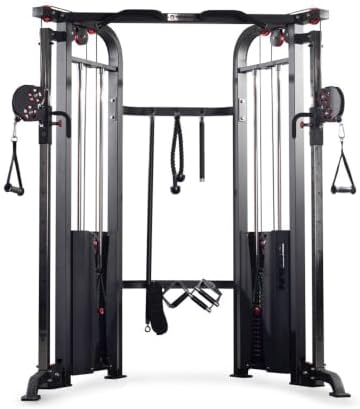
- SELECTORIZED FUNCTIONAL TRAINER: This all-in-one functional trainer has dual 200 LB weight stacks in 10 LB increments fo…
- BETTER MUSCLE ISOLATION: Adjust the pulleys across 20 vertical height positions to change the angle of resistance and is…
- ACCESSORIES INCLUDED: Comes with a rope handle, single D and double D handles, long bar and short bar handles, and dual …
2. XMark Functional Trainer (Dual 230 lb)
Best Selectorized Option
XMark has quietly built a reputation among garage gym owners as a US-based equipment brand that doesn’t cut corners on steel gauge, and this functional trainer is the heaviest-resistance selectorized machine on our list.
Real-world use case: Built for lifters who expect to outgrow a 200 lb stack — think intermediate lifters doing heavy lat pulldowns or cable rows who don’t want to hit the stack’s ceiling within the first year of ownership.
Build quality: Solid welded steel frame; XMark specifically notes their 230 lb stack version ships approximately 98% pre-assembled, a genuine time-saver compared to competitors.
Pulley smoothness: Upgraded aluminum attachments and a smooth-tracking cable path; consistent with XMark’s general reputation for commercial-adjacent hardware.
Cable ratio: 2:1, matching the Titan and giving similarly smooth, controlled resistance through the range of motion.
Resistance: Dual 230 lb stacks (460 lb combined) — the largest total resistance pool on this list, and genuinely close to what you’d find on a $2,000+ machine.
Attachments included: Comes with a commercial-style attachment package (handles, bars, straps); confirm the current bundle on XMark’s product page, as attachment sets are occasionally updated between production runs.
Assembly difficulty: Meaningfully easier than most competitors thanks to the near-fully-assembled weight stacks — XMark explicitly markets this as a selling point over rivals that ship in dozens of loose pieces.
Warranty: XMark backs its equipment with a standard limited warranty on frame and parts; contact XMark directly for current terms and replacement-parts service, which the company offers directly rather than through third-party fulfillment.
Footprint: Compact relative to its resistance — approximately 55″ W x 48″ D, with two height options: an 84″ version for standard ceilings and a 90″ version for taller spaces.
Ceiling height needed: The 84″ variant is purpose-built for shorter ceiling clearance, making it one of the better options for basements with 8-foot ceilings.
Pros
- Highest combined resistance (460 lbs) under $1,000 on this list
- Nearly pre-assembled weight stacks cut setup time dramatically
- Two height options let you match the machine to your ceiling
- US-based company with direct customer support for parts
Cons
- Slightly pricier than Titan when both are at full retail (though sales frequently close the gap)
- Bulkier stack housings mean less “wiggle room” in very tight garages
- Fewer independent long-term reviews than more established competitors like Titan or Body-Solid
Key Specifications
| Spec | Detail |
|---|---|
| Weight Stack | 2 x 230 lb (460 lb total) |
| Cable Ratio | 2:1 |
| Height Options | 84″ (standard ceilings) or 90″ (taller spaces) |
| Frame Material | Welded steel |
| Assembly | ~98% pre-assembled weight stack |
| Footprint | ~55″ W x 48″ D |
Exercises You Can Perform
The same broad category as any dual-stack functional trainer: pulldowns, rows, presses, flys, curls, pressdowns, woodchops, and two-person simultaneous training since both stacks operate independently.
Space Requirements
Similar to the Titan — plan for an 8–10 ft deep training zone, though the narrower stack housings make it slightly friendlier to tight garage bays.
Who Should Buy It
Lifters who specifically want more headroom than a 200 lb stack offers and who value faster assembly over saving the last $100–$150.
Who Should Skip It
Beginners who will never approach a 200 lb working resistance don’t need the extra 30 lbs per side — save the money and go with the Titan or Marcy instead.
Value for Money Rating
4.4 / 5 — excellent resistance-to-price ratio, slightly held back by a smaller independent review base.
Upgrade Options
None needed for most users — 460 lbs combined covers the overwhelming majority of home training needs, including advanced lifters.
Final Verdict: The pick for anyone who specifically wants the biggest weight stack available under $1,000. See current specs at <a href=”https://xmarkfitness.com/collections/functional-trainer” target=”_blank” rel=”nofollow noopener”>xmarkfitness.com</a>.

- ALL-IN-ONE FUNCTIONAL TRAINER – The XMARK GOAT supports pulldowns, rows, flys, curls, pushdowns, and more for full-body …
- DUAL 230 LB WEIGHT STACKS – 460 lbs total stack weight with a 2:1 pulley ratio provides up to 115 lbs of resistance per …
- 98% PRE-ASSEMBLED – Cables arrive installed and routed, reducing assembly time so you can start training sooner. Heavy u…
3. Valor Fitness BD-61 Cable Crossover Station
Best Plate-Loaded Option
If you already have a set of Olympic plates sitting around your rack, paying extra for a built-in weight stack is money spent twice. The BD-61 solves that by being plate-loaded — you supply the resistance, it supplies the pulley system.
Real-world use case: Best suited to someone who already owns a barbell and plates and wants to add cable functionality without duplicating the expense of a second weight stack.
Build quality: Steel construction with rubber end caps to protect floors; includes an optional floor-anchoring kit for extra stability when pulling heavy.
Pulley smoothness: A double bar track design keeps both pulley carriages stable and true, which matters more on plate-loaded machines since uneven plate loading can otherwise introduce wobble.
Cable ratio: Effectively 1:1 on a plate-loaded crossover — the plates you load are the resistance you feel, unlike the mechanical-advantage ratios on selectorized stacks.
Resistance: Determined entirely by how many plates you load; the frame is rated up to roughly 400 lbs total loading capacity, which is more than almost anyone will use on cable work.
Attachments included: Lat pull bar, curl/row bar, and two single-hand strap handles, plus an integrated multi-grip pull-up station.
Assembly difficulty: Moderate — fewer moving parts than a dual-stack machine since there’s no weight-stack housing to install, which typically shortens build time.
Warranty: 3-year frame warranty and 1-year cable warranty, a fairly standard structure for this equipment class.
Footprint: Compact for its capability at roughly 48″ W x 46″ D.
Ceiling height needed: Standard 8-foot ceilings are fine for most users; taller lifters should check clearance on the pull-up bar specifically.
Pros
- Reuses plates you already own instead of paying for a redundant weight stack
- Genuinely useful integrated pull-up station
- Solid 3-year frame warranty
- Compact footprint relative to dual-stack machines
Cons
- You must own (or separately buy) enough plates to make it worthwhile — plates aren’t included
- 1:1 ratio means less smoothness on light, high-rep work compared to a 2:1 selectorized stack
- Loading and unloading plates for each exercise is slower than pin-adjusting a stack
- Best value only applies if you already have plates; otherwise the “budget cable machine” math changes fast once you add plate costs
Key Specifications
| Spec | Detail |
|---|---|
| Type | Plate-loaded |
| Loading Capacity | Up to ~400 lb total |
| Cable Ratio | 1:1 |
| Pulley Positions | 16–17 adjustable height positions |
| Warranty | 3-year frame / 1-year cable |
| Footprint | ~48″ W x 46″ D |
Exercises You Can Perform
Cable crossovers, chest flys, lat pulldowns, seated/standing rows, tricep pressdowns, bicep curls, pull-ups, chin-ups, and any exercise that benefits from adjustable dual-pulley height.
Space Requirements
Similar 8–10 ft training clearance in front of the unit; the frame itself is one of the narrower options on this list.
Who Should Buy It
Anyone with an existing plate collection who wants a cable machine for home gym use without redundant spending on a second resistance source.
Who Should Skip It
Beginners with no plates yet — you’ll spend more buying plates separately than you would just buying a selectorized stack machine outright.
Value for Money Rating
4.3 / 5 for plate owners; drops to roughly 3.5 / 5 for anyone starting from zero plates.
Upgrade Options
Simply add more plates over time — there’s no ceiling on resistance beyond the frame’s rated capacity, which is a genuine long-term advantage over fixed weight stacks.
Final Verdict: The smartest financial move on this list, but only for buyers who already have plates. Check current availability at <a href=”https://valorfitness.com/products/valor-fitness-bd-61-cable-crossover-station” target=”_blank” rel=”nofollow noopener”>valorfitness.com</a>.

- ALL-IN-ONE CABLE MACHINE FOR FULL BODY WORKOUTS – Combines cable crossover training, lat pulldowns, seated rows, pull up…
- 17 ADJUSTABLE PULLEY POSITIONS FOR EXERCISE VARIETY – Adjustable cable system allows users to customize pulley height fo…
- SMOOTH CABLE PERFORMANCE WITH DUAL TRACK DESIGN – Double guide bar system helps provide stable and consistent cable move…
4. Body-Solid Powerline PFT50
Best for Small Home Gyms
Body-Solid has one of the strongest warranty reputations in the entire home fitness industry, and the PFT50 brings that reliability to a genuinely compact, single-tower format.
Real-world use case: Ideal for a smaller room where a full dual-column functional trainer simply won’t fit, but you still want real selectorized resistance and a proper pull-up bar.
Build quality: Single-column steel tower construction; less floor-to-ceiling footprint than dual-stack designs, with an integrated straight chin-up bar built into the frame.
Pulley smoothness: 180-degree swivel pulleys allow a wide range of starting angles without needing to physically move the machine or re-route cables — Body-Solid’s “no cable change” design is a genuine time-saver during circuit-style training.
Cable ratio: 4:1 — meaning you feel roughly a quarter of the stack’s rated weight, which produces very smooth resistance well-suited to rehab work, high-rep training, and beginners easing into cable training. It also means the effective maximum resistance is lower than the raw stack number suggests.
Resistance: 210 lb single weight stack, giving an effective working resistance topping out around 50–55 lbs due to the 4:1 ratio — plenty for isolation and accessory work, less so for heavy compound pulls.
Attachments included: Two nylon cable handles; compatible with any standard cable attachment for further customization.
Assembly difficulty: Straightforward relative to dual-stack machines — fewer components, a smaller frame, and a lighter overall product weight around 329 lbs.
Warranty: This is where the PFT50 separates itself: Body-Solid backs it with a lifetime warranty on the frame and welds, plus lifetime coverage on pulleys, bushings, bearings, hardware, plates, and guide rods, and lifetime coverage on cables, upholstery, and grips under normal wear. That’s a meaningfully longer warranty than most machines at this price point offer.
Footprint: Roughly 48″ W x 44″ D — one of the smallest true selectorized cable machines on this list.
Ceiling height needed: Standard residential ceilings work fine given the compact single-tower height.
Pros
- Industry-leading lifetime warranty on frame, pulleys, and hardware
- Smallest footprint among the selectorized (weight stack) options on this list
- 4:1 ratio makes resistance very smooth and joint-friendly
- Built-in chin-up bar adds bodyweight training options
- Faster, simpler assembly than dual-stack machines
Cons
- Single tower means only one person can train at a time (no simultaneous dual-user crossovers)
- 4:1 ratio caps effective resistance lower than a 2:1 machine with the same stack size — strong, experienced lifters may outgrow it on heavier pulling movements
- Fewer built-in attachments included out of the box compared to Titan or XMark
Key Specifications
| Spec | Detail |
|---|---|
| Weight Stack | 210 lb single stack |
| Cable Ratio | 4:1 |
| Pulley Movement | 180° swivel |
| Product Weight | 329 lbs |
| Warranty | Lifetime frame, pulleys, hardware, cables |
| Footprint | ~48″ W x 44″ D |
Exercises You Can Perform
Tricep pressdowns, bicep curls, bent-over rows, woodchops, cable crossovers, pec flys, delt raises, lat pulldowns, and chin-ups/pull-ups via the integrated bar.
Space Requirements
The smallest true weight-stack option on this list — workable in rooms as tight as roughly 7 ft x 8 ft once you allow for cable extension.
Who Should Buy It
Buyers prioritizing warranty security and a compact footprint over maximum resistance — a great fit for a spare bedroom, apartment gym, or anyone who wants Body-Solid’s long-term reliability.
Who Should Skip It
Advanced lifters who want to load heavy compound cable movements (like heavy standing cable rows) will find the effective resistance ceiling limiting compared to a 2:1 dual-stack machine.
Value for Money Rating
4.4 / 5 — the warranty alone pushes this rating up; it would be higher still if it offered more resistance headroom for advanced users.
Upgrade Options
Body-Solid sells official weight stack upgrade kits (including higher-capacity stack options) compatible with several of their selectorized machines — worth checking their current compatibility list if you think you’ll want more resistance later.
Final Verdict: The best “buy it once” option for smaller spaces, backed by a warranty most competitors can’t match. Details at <a href=”https://www.bodysolid.com/home/pft50/powerline_pft50_functional_trainer/features” target=”_blank” rel=”nofollow noopener”>bodysolid.com</a>.

- INDUSTRY LEADER: For 30+ years, Body Solid has held the widest array of products designed to meet the demands of the eve…
- 180-DEGREE SWIVELING PULLEYS: This functional trainer features a no cable change design and 180-degree swiveling pulleys…
- COMPLETE WORKOUT SYSTEM: This Functional Trainer comes with a hefty 210 lb. weight stack and two nylon cable handles, al…
5. Marcy MWM-990
Best for Beginners
Not everyone needs (or can afford) a 400+ lb dual-stack commercial-style machine on day one. The Marcy MWM-990 is the most accessible true dual-stack cable machine on this list, price-wise.
Real-world use case: A genuinely good entry point for someone who has never owned a cable machine and wants to learn fundamental pulling, pressing, and isolation patterns before investing more.
Build quality: Steel-frame construction typical of Marcy’s mid-tier home gym line — solid for its price point, though noticeably lighter-duty than the Titan or XMark frames.
Pulley smoothness: Functional but basic; expect more plastic componentry in the pulley housings than on the pricier picks, which is the primary trade-off for the lower price.
Cable ratio: 2:1, keeping resistance reasonably smooth despite the lighter-duty hardware.
Resistance: Dual 150 lb stacks (300 lb combined) — plenty for beginners and most intermediate accessory work, though it will feel limiting sooner than the Titan or XMark for advanced lifters.
Attachments included: Standard handle and bar set sufficient for core cable movements; don’t expect the deeper attachment bundle that Titan includes.
Assembly difficulty: Generally faster and easier than the larger machines on this list, owing to the smaller stack size and lighter overall components.
Warranty: Standard limited warranty typical of Marcy’s home gym lineup; confirm current terms with the retailer at purchase, as Marcy’s warranty structure varies slightly by product line.
Footprint: Compact at roughly 48″ W x 41″ D — one of the smaller dual-stack options available.
Ceiling height needed: Fits comfortably under standard residential ceilings.
Pros
- Lowest price point on this list for a true dual-stack functional trainer
- Compact footprint suits smaller rooms
- Easier, faster assembly than the heavier-duty machines
- A legitimate way to try cable training before committing more budget
Cons
- More plastic in the pulley and housing components than pricier competitors
- 150 lb stacks will feel limiting for anyone who trains consistently for more than a year or two
- Less structural rigidity under heavy loading compared to Titan, XMark, or Body-Solid
- Shorter track record for long-term cable and pulley durability
Key Specifications
| Spec | Detail |
|---|---|
| Weight Stack | 2 x 150 lb (300 lb total) |
| Cable Ratio | 2:1 |
| Footprint | ~48″ W x 41″ D |
| Height | ~83″ |
| Price Tier | Lowest on this list |
Exercises You Can Perform
The full standard functional trainer catalog at a lighter resistance ceiling: lat pulldowns, rows, chest flys, crossovers, curls, pressdowns, and light cable squats/lunges.
Space Requirements
One of the friendliest footprints for small rooms on this entire list — a legitimate option for spare bedrooms and apartments with a dedicated corner.
Who Should Buy It
First-time cable machine buyers, beginners still building strength, or anyone who wants to confirm they’ll actually use a functional trainer regularly before spending $900+.
Who Should Skip It
Anyone who already trains seriously and expects to need more than 150 lbs of resistance per side within the first year — you’ll likely outgrow this faster than the pricier options and end up buying twice.
Value for Money Rating
4.0 / 5 — excellent for the price, but the ceiling on long-term durability and resistance keeps it from scoring higher.
Upgrade Options
None built in — this is a genuine entry-level machine, and “upgrading” typically means replacing it entirely once you outgrow the stack.
Final Verdict: The right call for a true beginner or a tight budget, with the understanding that serious lifters will likely outgrow it.

- PREMIUM STEEL CONSTRUCTION – This home gym system is made with heavy-duty steel tubing and reinforced with guard rods th…
- WEIGHT STACK LOCK – This gear comes with a 150-pound selectorized weight stack that can be customized according to your …
- DUAL ACTION PRESS ARMS-Designed with dual action press arms, this versatile equipment allows you to perform chest press …
6. Mikolo Wall-Mounted Cable Crossover Machine
Best for Garage Gyms (Space-Saving)
Not every garage has room for a 64-inch-wide, 44-inch-deep freestanding machine. The Mikolo wall-mounted unit solves that by attaching directly to a wall or stud frame, freeing up the floor space a standalone functional trainer would otherwise consume.
Real-world use case: Perfect for a garage gym that already has a rack, bench, and floor space dedicated to barbell work, where the only thing missing is cable functionality — without sacrificing another few feet of floor.
Build quality: Steel construction rated for wall or stud mounting; because it isn’t freestanding, its stability depends heavily on being anchored into structural framing (not drywall alone) — this is a genuine installation requirement, not optional.
Pulley smoothness: Reasonably smooth for the price tier, with 27–33 adjustable pulley height positions depending on the specific model version.
Cable ratio: 2:1 on most current versions, delivering smoother resistance than the ratio alone might suggest for a wall-mounted unit.
Resistance: 200–210 lb weight stack depending on the model configuration — a solid amount of resistance for a unit this compact.
Attachments included: Lat bar and basic handle set; check the current listing, as Mikolo has released several model variants with slightly different bundles.
Assembly difficulty: Lower physical footprint but installation does require securing into wall studs or a mounting board — budget extra time for finding studs, using appropriate lag bolts, and potentially adding a mounting plate if your studs don’t align conveniently.
Warranty: Standard limited manufacturer warranty; confirm current terms at time of purchase, as third-party marketplace listings can vary from the manufacturer’s direct terms.
Footprint: This is the entire point of this machine — roughly 30″ W x 20″ D of wall space, with zero standalone floor footprint beyond where you stand to train.
Ceiling height needed: Because it’s wall-mounted rather than floor-standing, height requirements are more flexible, though very tall users have reported the lat pulldown position can feel low unless mounted appropriately high or used from a seated position.
Pros
- By far the smallest footprint on this list — genuinely space-saving
- Frees up floor space for a rack, bench, or other equipment
- Solid weight stack (200–210 lb) for the compact format
- Lower price point than most freestanding functional trainers
Cons
- Requires secure stud/structural mounting — not suitable for every wall
- Lat pulldown height can feel restrictive for taller users
- Less exercise variety than a full dual-column functional trainer (no true “crossover” between two independent columns unless you buy two units)
- Installation is less forgiving of mistakes than assembling a freestanding machine
Key Specifications
| Spec | Detail |
|---|---|
| Weight Stack | 200–210 lb (model dependent) |
| Cable Ratio | 2:1 |
| Mounting | Wall/stud-mounted |
| Pulley Positions | 27–33 (model dependent) |
| Footprint | ~30″ W x 20″ D (wall space) |
Exercises You Can Perform
Lat pulldowns, single and dual-handle rows, tricep pressdowns, bicep curls, face pulls, and various unilateral cable work; less suited to true two-arm cable crossovers than a dual-column machine.
Space Requirements
The smallest of any machine on this list by a wide margin — realistically usable in garages, basements, or apartments where floor space is the primary constraint.
Who Should Buy It
Garage gym owners who already have a rack and bench and specifically need cable functionality without losing more floor space, or apartment dwellers with a suitable stud wall.
Who Should Skip It
Anyone without access to a solid, mountable wall — this isn’t optional hardware-store negotiation; if you can’t anchor it properly, it isn’t safe to use at higher resistances. Also skip it if you want true two-column crossover exercises as your primary training style.
Value for Money Rating
3.9 / 5 — excellent for the specific space-saving use case, but the exercise variety trade-off keeps it from scoring as high as the freestanding options.
Upgrade Options
Some buyers install two units on opposite walls to approximate a crossover setup, though this roughly doubles the cost and moves you out of true “budget” territory.
Final Verdict: The right answer specifically for the space-constrained garage or apartment gym — not a universal top pick, but the best tool for that particular job.
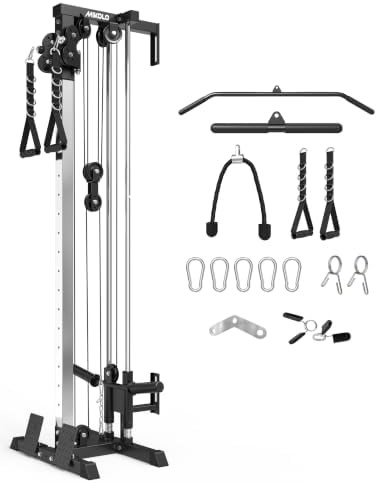
- 【All-in-One Gym,SPACE-SAVING 】 This wall-mounted cable crossover machine by Mikolo is the ultimate space saver. Its comp…
- 【Designed for Home Gyms】 Equipped with a large footboard for seated cable rows and upward 10° weight pegs to prevent pla…
- 【Sturdy & Durable Structure】Built with a commercial-grade 14-gauge powder-coated steel frame and nylon-coated aircraft-q…
Best For: Quick Recap
| Category | Winner |
|---|---|
| Best for Small Home Gyms | Body-Solid Powerline PFT50 |
| Best for Garage Gyms | Mikolo Wall-Mounted Cable Crossover Machine |
| Best for Beginners | Marcy MWM-990 |
| Best Overall Value | Titan Fitness Functional Trainer |
| Best Plate-Loaded Option | Valor Fitness BD-61 Cable Crossover Station |
| Best Selectorized Option | XMark Functional Trainer (230 lb) |
Complete Setup Cost Estimates
The machine price is rarely the full story. Here’s what a realistic, complete setup looks like for each pick, including an optional bench, a floor mat, and basic attachments (if not already bundled).
| Item | Titan Functional Trainer | Valor BD-61 (Plate-Loaded) | Body-Solid PFT50 | Marcy MWM-990 |
|---|---|---|---|---|
| Machine | ~$999 | ~$749 | ~$799 | ~$579 |
| Optional adjustable bench | ~$150–$250 | ~$150–$250 | ~$150–$250 | ~$150–$250 |
| Floor mat / flooring (per machine footprint) | ~$80–$150 | ~$70–$120 | ~$60–$100 | ~$60–$100 |
| Basic attachments (if upgrading beyond included set) | ~$0–$80 | ~$0–$80 | ~$40–$100 | ~$40–$100 |
| Estimated Total | ~$1,230–$1,480 | ~$970–$1,200* | ~$1,050–$1,250 | ~$830–$1,030 |
*Valor’s total assumes you already own plates; add roughly $200–$400 for a starter plate set if you don’t.
If floor space is tight, pairing your cable machine with a space-efficient bench matters more than people expect — our guide to the <a href=”https://liftqube.com/best-foldable-weight-bench-for-small-spaces/” target=”_blank” rel=”noopener”>best foldable weight bench for small spaces</a> covers options that fold flat against a wall between sessions, which works especially well alongside the Mikolo wall-mounted unit or the compact Body-Solid PFT50.
Buying Guide: What Actually Matters
Cable Ratios, Explained Simply
The cable ratio tells you how the number on the weight stack pin relates to what you actually feel pulling the handle.
- 1:1 ratio (plate-loaded machines): The weight you load is the weight you feel. Simple, but less smooth on light or fast movements.
- 2:1 ratio (most selectorized functional trainers): You feel roughly half the number on the pin. A 100 lb setting feels like 50 lbs. This produces smoother, less jerky motion, especially at the start and end of each rep.
- 4:1 ratio (like the Body-Solid PFT50): You feel roughly a quarter of the pin weight. Extremely smooth and joint-friendly, but it caps your effective maximum resistance lower for a given stack size.
Neither ratio is objectively “better” — 2:1 machines let you access more effective resistance from a given stack size, while higher ratios (like 4:1) trade resistance ceiling for exceptional smoothness, which matters for rehab, high-rep training, and beginners.
Weight Stacks vs. Plate-Loaded
| Factor | Selectorized (Weight Stack) | Plate-Loaded |
|---|---|---|
| Speed of changing resistance | Instant (move a pin) | Slower (add/remove plates) |
| Upfront cost | Higher (stack is built-in) | Lower if you already own plates |
| Long-term resistance ceiling | Fixed at purchase | Expandable indefinitely |
| Noise/smoothness | Generally smoother, enclosed | Can clank; smoothness depends on plate quality |
| Best for | Most home users, especially beginners/intermediates | Lifters who already own an Olympic plate collection |
Pulley Quality
This is the detail budget shoppers overlook most. Look specifically for:
- Aluminum pulley wheels over plastic/nylon — they resist wear from repeated cable friction far longer.
- Sealed bearings in the pulley housing, which reduce squeaking and grinding over time.
- Nylon-coated steel cables rather than bare steel, which reduces fraying and rust risk.
Stability
A cable machine under real load — especially heavy standing rows or crossovers — puts significant torque through the frame. Wider base footprints, heavier total product weight, and (for wall-mounted units) proper stud anchoring are the three biggest predictors of a stable, non-wobbly machine.
Footprint and Ceiling Clearance
Before buying, physically measure your space with tape on the floor — not just “eyeballing” it. Account for:
- The machine’s stated width and depth
- At least 2–3 feet of clearance behind you for full arm extension on rows and crossovers
- Door swing paths and walkways that shouldn’t be blocked
Most freestanding functional trainers stand between 78″ and 84″ tall and fit comfortably under a standard 8-foot ceiling, but always check the specific model — a few taller units need 9 feet or more.
Accessories
At minimum, look for a machine that includes a straight bar, a rope attachment, a set of D-handles, and an ankle strap out of the box. Everything else (specialty grips, EZ-curl attachments, additional ankle cuffs) can be added later for relatively little money.
Maintenance
Covered in detail below, but factor this into your buying decision: machines with sealed, enclosed weight stacks generally require less ongoing maintenance than exposed plate-loaded carriages, which accumulate more dust and need more frequent cleaning.
Warranty
Warranty length is one of the strongest signals of how confident a manufacturer is in their own hardware. Body-Solid’s lifetime frame and pulley warranty stands out on this list; most competitors offer somewhere between 1 and 5 years on frame components, with shorter coverage (often 1 year) on cables specifically, since cables are considered a wear item.
Long-Term Ownership Costs
Budget for periodic replacement of wear items over a multi-year ownership period:
- Cables: Typically need replacement every few years of regular use, more often with heavy daily training. Replacement cables generally run $20–$60 depending on length and machine model.
- Pulley bearings/wheels: Occasionally need replacement on lower-end machines with plastic components; less frequently on aluminum-pulley machines.
- Grips/handles: Foam and rubber grips wear out with use and are inexpensive ($10–$30) to replace individually.
If you’re also building out free-weight capacity alongside your cable machine, it’s worth reading our breakdown of the <a href=”https://liftqube.com/best-adjustable-dumbbells-for-home-gym/” target=”_blank” rel=”noopener”>best adjustable dumbbells for home gym</a> use, since dumbbells and a cable machine cover different strength curves and complement each other well in a complete program.
Functional Trainer vs. Cable Crossover Machine
These terms get used almost interchangeably in marketing copy, but there’s a real distinction worth understanding before you buy.
| Functional Trainer | Cable Crossover Machine | |
|---|---|---|
| Definition | Two independent, fully adjustable pulley columns, each with its own weight stack or plate load | Traditionally a fixed high-to-low pulley system, often part of a larger machine or rack |
| Adjustability | Pulleys typically slide the full height of each column | Often limited to a few fixed pulley heights |
| Independence | Each side/column operates independently — great for unilateral training | Usually operates as a single connected system |
| Best for | Maximum exercise variety, unilateral work, two-person simultaneous use | Simpler, often more affordable, more compact setups |
In practice, most of the machines on this list — including the Titan, XMark, Body-Solid, and Marcy — are technically functional trainers because they have two independently adjustable columns. The Valor BD-61 straddles both categories, since it’s marketed as a crossover station but functions with adjustable independent pulleys similar to a functional trainer. When people search for the best cable crossover machine, in 2026 they’re almost always describing what the industry now calls a functional trainer — the terms have effectively merged in common usage, even though the original crossover machines were simpler, fixed-position units.
Common Buying Mistakes
- Not measuring ceiling height before ordering. Most machines fit under 8-foot ceilings, but a handful need 9 feet, especially with the pull-up bar in use. Measure first.
- Ignoring cable ratio and comparing stack sizes only. A 200 lb stack at 2:1 gives you up to 100 lbs of effective resistance per side; the same 200 lb stack at 4:1 caps out around 50 lbs. Don’t compare raw stack numbers across different ratios as if they’re equivalent.
- Underestimating assembly time. Budget a full afternoon (or more) for dual-stack machines, and recruit a second person — weight stack installation specifically is not a comfortable solo job.
- Buying a wall-mounted unit without confirming stud placement. Measure your studs before ordering, not after the box arrives.
- Forgetting floor protection. Weight stacks dropping (even gently) transmits real impact through a floor; a proper mat protects both your subfloor and reduces noise.
- Assuming plate-loaded is automatically cheaper. It only saves money if you already own plates — buying plates from scratch to feed a plate-loaded machine can easily cost more than a selectorized alternative.
- Overlooking warranty terms on cables specifically. Frame warranties are often long; cable warranties are frequently much shorter (commonly just 1 year), since cables are a wear item — know what you’re actually covered for.
Maintenance Tips
Keeping a cable machine running smoothly for years doesn’t take much time, but it does take consistency:
- Wipe cables down monthly with a dry or lightly oiled cloth to remove dust, chalk, and grime buildup that accelerates fraying.
- Inspect cable ends and connection points every few months for fraying strands — replace immediately if you spot any, since a failing cable under load is a genuine safety risk.
- Lubricate pulley bearings per the manufacturer’s recommended schedule (typically every few months for regular use) using a light machine oil, not household WD-40 substitutes.
- Check and re-tighten frame bolts every 3–6 months, especially on machines that see heavy, aggressive pulling loads.
- Keep weight stacks dust-free by periodically wiping down the enclosed housing, particularly in garage environments with more airborne dust.
- For wall-mounted units, re-check anchor bolts periodically to ensure the mounting hasn’t loosened from the wall structure over time.
Frequently Asked Questions
Is a cable machine worth it? For most home gym owners, yes. A single cable machine can replace the function of several separate isolation machines (lat pulldown, cable row, tricep pressdown, chest fly station) in one footprint, and it allows for constant-tension resistance and a wide range of angles that free weights alone can’t easily replicate.
Can a cable machine replace free weights? Not entirely, and it shouldn’t try to. Cable machines excel at isolation work, constant tension, and safe, controlled movement patterns, but they don’t replace the stabilizer-muscle demands and loading potential of barbell squats, deadlifts, or heavy presses. Most well-rounded home gyms use cables to complement free weights, not substitute for them entirely.
How much space do I need? For a freestanding dual-stack functional trainer, plan on roughly 8 feet of width and 8–10 feet of depth once you account for full range of motion during crossovers and rows. Wall-mounted units need far less — often just 3–4 feet of usable training space in front of the wall.
Are cable machines good for beginners? Yes, often more so than free weights early on. The fixed movement path and adjustable, gradual resistance increments make it easier to learn proper form and progressively overload safely, without the balance and stabilization demands of free weights.
What cable ratio is best? There’s no universal “best” — it depends on your goals. A 2:1 ratio is the most common and versatile choice for general strength training, offering a good balance of resistance ceiling and smoothness. Higher ratios like 4:1 suit rehab, high-rep, or beginner-focused training where smoothness matters more than raw resistance ceiling.
Can I build muscle using only cables? Yes. Cable machines provide constant tension throughout the entire range of motion, including at the top and bottom of a rep where free weights often lose tension — this can be a genuine hypertrophy advantage for certain movements. A well-programmed cable-only routine, performed consistently with progressive overload, can absolutely build meaningful muscle over time.
What’s the difference between a functional trainer and a cable crossover machine? In modern usage, they’re largely the same thing — a machine with two independently adjustable cable columns. Historically, “cable crossover” referred to simpler, fixed-position machines, while “functional trainer” implied full-height adjustability on both sides, but the terms are now used almost interchangeably by most manufacturers and retailers.
Do I need a bench with my cable machine? Not strictly, but many exercises (seated cable rows, incline cable presses, lying leg raises) benefit significantly from having an adjustable bench nearby. It’s a worthwhile add-on if your budget allows.
How long does assembly take? For dual-stack functional trainers like the Titan or XMark, budget 3–6 hours with two people. Compact single-tower or wall-mounted units are typically faster, often under 2 hours.
Final Recommendation
There’s no single “best” cable machine — there’s a best machine for your specific space, budget, and training goals. Here’s how we’d break it down by buyer type:
- If you want the safest, most complete single purchase: Go with the Titan Fitness Functional Trainer. It has the best combination of resistance, build quality, and included attachments under $1,000.
- If you already own bumper plates: The Valor Fitness BD-61 will save you real money over the life of the machine and gives you effectively unlimited resistance headroom.
- If your space is genuinely tight: The Body-Solid Powerline PFT50 or the Mikolo Wall-Mounted Cable Crossover Machine will fit where a full-size functional trainer simply can’t, and the PFT50’s lifetime warranty is hard to beat.
- If you’re brand new to cable training and want to keep costs low while you learn: Start with the Marcy MWM-990 and reassess in a year once you know how much you’ll actually use it.
- If you want maximum resistance headroom without going plate-loaded: The XMark Functional Trainer with its 460 lb combined stack gives you the most room to grow.
Whichever machine you choose, the biggest factor in whether it’s “worth it” isn’t the spec sheet — it’s whether it ends up bolted to your wall or gathering dust. Measure your space honestly, pick the machine that matches how you’ll actually train, and you’ll get years of genuine use out of any option on this list.
Best Cable Machines Under $1,000 (2026): 6 Tested-Spec Picks, Ranked by Real Use Case
If you’ve spent any time shopping for a cable machine for your home gym, you’ve probably noticed the same frustrating pattern: the “best” lists are dominated by $2,000–$4,000 functional trainers, followed by a vague “or if you’re on a budget, try…” afterthought with no real detail behind it.
That’s the gap this guide fills. Every machine below is realistically available for under $1,000 (some well under), and every spec — weight stack size, cable ratio, footprint, warranty — is pulled directly from the manufacturer’s own listing, not estimated. Where prices fluctuate (and with fitness equipment, they always do), we’ve noted the typical range instead of a single number that will be wrong by the time you read this.
Whether you’re outfitting a one-car garage, a spare bedroom, or a basement corner, this article will help you find a budget cable machine that won’t feel like a compromise.
Quick Verdict
If you only read one section, read this one.
- Best Overall Value: Titan Fitness Functional Trainer — dual 200 lb stacks, 2:1 ratio, and genuine commercial-style build for around $999, making it the best all-around best functional trainer under $1000.
- Best Selectorized Option (biggest stack): XMark Functional Trainer — dual 230 lb stacks, the heaviest selectorized resistance on this list.
- Best Plate-Loaded Option: Valor Fitness BD-61 Cable Crossover Station — reuses the bumper plates you already own instead of paying for a built-in stack.
- Best for Small Home Gyms: Body-Solid Powerline PFT50 — a single, compact tower with a lifetime frame and pulley warranty.
- Best for Beginners: Marcy MWM-990 — the lowest entry price on this list for a true dual-stack machine.
- Best for Garage Gyms (space-saving): Mikolo Wall-Mounted Cable Crossover Machine — bolts to a wall or stud frame and gives back your floor space.
If you want the short answer: for most people building a serious home gym on a real budget, the Titan Fitness Functional Trainer is the smartest single purchase on this list. If you already own bumper plates, the Valor BD-61 will save you real money over time.
Quick Comparison Table
| Machine | Type | Weight Stack | Cable Ratio | Footprint (W x D) | Height | Typical Price* |
|---|---|---|---|---|---|---|
| Titan Fitness Functional Trainer | Selectorized, dual stack | 2 x 200 lb (400 lb total) | 2:1 | 64″ x 44″ | 82″ | ~$949–$1,099 |
| XMark Functional Trainer (230 lb) | Selectorized, dual stack | 2 x 230 lb (460 lb total) | 2:1 | ~55″ x 48″ | 84″ | ~$999–$1,199 |
| Valor Fitness BD-61 Cable Crossover | Plate-loaded | User-supplied (up to 400 lb capacity) | 1:1 | ~48″ x 46″ | ~83″ | ~$599–$899 |
| Body-Solid Powerline PFT50 | Selectorized, single tower | 210 lb | 4:1 (approx. 52 lb working resistance at max) | ~48″ x 44″ | ~83″ | ~$699–$899 |
| Marcy MWM-990 | Selectorized, dual stack | 2 x 150 lb (300 lb total) | 2:1 | ~48″ x 41″ | ~83″ | ~$539–$650 |
| Mikolo Wall-Mounted Cable Crossover | Selectorized, wall-mounted | 200–210 lb (single or dual pulley) | 2:1 | ~30″ x 20″ (wall-mounted) | ~78″–83″ | ~$485–$699 |
*Prices are approximate as of 2026 and change frequently with sales, shipping promotions, and retailer stock. Always confirm the current price on the manufacturer’s site before buying.
How We Selected These Machines
We didn’t just reshuffle a generic “top 10” list. Every machine included here had to clear four filters:
- Verifiable specs. We only included machines with cable ratio, weight stack size, and dimensions published directly by the manufacturer — no guessing based on stock photos.
- Real-world price ceiling. Every pick is realistically obtainable under $1,000 (including a couple that regularly dip well below that), factoring in typical sale pricing, not just a rare doorbuster.
- Build quality signals. We weighted steel gauge, pulley material (aluminum vs. plastic-heavy nylon), cable coating, and warranty length, since these are the components that fail first on cheap machines.
- Coverage across use cases. Rather than six versions of the same “dual-stack functional trainer,” we deliberately included a plate-loaded option, a wall-mounted option, a single-tower compact option, and a beginner-priced option, because “best” depends heavily on your space and goals.
This guide follows a straightforward, honest-content standard: we cite manufacturer specifications directly, we flag where sources disagree, and we tell you who should skip a product just as clearly as who should buy it. For general background on why cable-based resistance training is effective, <a href=”https://www.acefitness.org/continuing-education/certified/may-2019/7273/the-forgotten-benefits-of-machine-training/” target=”_blank” rel=”nofollow noopener”>ACE Fitness has a solid explainer on cable pulley machines and functional strength patterns</a> that’s worth a read if you’re new to this style of training.
Individual Reviews
1. Titan Fitness Functional Trainer
Best Overall Value
Titan built this machine to sit right at the edge of “budget” and “serious equipment,” and it mostly succeeds. It’s the closest thing on this list to what you’d find in a commercial gym, minus the $2,500+ price tag.
Real-world use case: This is the machine for someone who wants one purchase to cover lat pulldowns, cable rows, chest flys, tricep pressdowns, cable curls, face pulls, and loaded carries/lunges with horizontal resistance — without needing to also buy a separate rack or bench right away.
Build quality: Heavy-gauge steel frame with a wide stance base for stability. At 672 lbs assembled, it plants itself; users don’t report the tipping or rocking that plagues lighter budget units.
Pulley smoothness: Uses a red-anodized aluminum pulley system rather than the plastic pulleys common at this price point — a meaningful upgrade for long-term smoothness and reduced cable fraying.
Cable ratio: 2:1. Setting the pin to 100 lbs gives you roughly 50 lbs of actual resistance, which means smoother, less jerky starts on lighter, higher-rep accessory work.
Resistance: Dual 200 lb stacks (400 lb combined), adjustable in 10 lb increments.
Attachments included: Tricep rope, ankle strap, D-handle grips, D-handle straps, long bar, short bar, and triangle D-row — a genuinely complete starter kit.
Assembly difficulty: This is the machine’s weakest point. Reviewers consistently describe assembly as lengthy (plan for 4–6+ hours with two people) due to the number of steel components and the weight stack installation. It’s not difficult so much as long.
Warranty: Titan backs the frame and components with a standard limited warranty; check the current terms on titan.fitness, as coverage periods are occasionally updated.
Footprint: 64″ W x 44″ D base, 82″ tall. Titan recommends 8–10 feet of open training space in front of the machine for full range of motion on cable crossovers and rows.
Ceiling height needed: A standard 8-foot ceiling works, but tall users doing overhead pulldown variations should measure their reach before buying — this is one of the shorter functional trainers on the market by design, which is actually a plus for basements.
Pros
- Commercial-grade 2:1 ratio and aluminum pulleys at a sub-$1,000 price
- 400 lb combined resistance is enough for most intermediate and advanced lifters
- Comprehensive attachment package included in the box
- Stable, low-flex frame even under heavy loaded pulls
- Fits under lower ceilings than most full-size functional trainers
Cons
- Long, involved assembly process
- Weight stacks are fixed — you cannot add plates beyond 200 lbs per side
- 64″ width needs a genuinely open wall or corner, not a tight closet space
- Some users report minor stack shake at the top end of the weight range
Key Specifications
| Spec | Detail |
|---|---|
| Weight Stack | 2 x 200 lb (400 lb total), 10 lb increments |
| Cable Ratio | 2:1 |
| Pulley Positions | 20 vertical height positions |
| Frame Material | Heavy-gauge steel |
| Pulley Material | Red-anodized aluminum |
| Product Weight | 672 lbs |
| Footprint | 64″ W x 44″ D |
| Height | 82″ |
Exercises You Can Perform
Lat pulldowns, seated/standing cable rows, cable chest flys, cable crossovers, tricep pressdowns, cable bicep curls, face pulls, cable woodchops, single-arm rows, cable lunges and squats with horizontal resistance, pull-ups (via the integrated bar), and dozens of unilateral accessory movements.
Space Requirements
Minimum practical footprint: roughly 8 ft wide x 10 ft deep once you account for full arm extension during crossovers and rows. It fits comfortably in a single-car garage bay alongside a bench.
Who Should Buy It
Intermediate to advanced home gym owners who want the closest experience to a commercial functional trainer without paying commercial prices, and who have a genuinely open wall or corner to dedicate to it.
Who Should Skip It
Anyone in a tight apartment or shared space who needs something foldable or wall-mounted — this is a large, permanent, freestanding unit. Also skip it if you already own a full set of bumper plates and would rather not pay for a built-in stack (see the Valor BD-61 instead).
Value for Money Rating
4.6 / 5 — the best resistance-per-dollar and build-quality-per-dollar ratio on this list.
Upgrade Options
If you later want more resistance, Titan and third-party sellers offer plate-loaded functional trainers as a step up, though at that point you’re looking at a different machine rather than an add-on.
Final Verdict: If you can only buy one cable machine and want the safest, most complete choice, this is it. Learn more directly from the manufacturer at <a href=”https://titan.fitness/collections/functional-trainers” target=”_blank” rel=”nofollow noopener”>titan.fitness</a>.
2. XMark Functional Trainer (Dual 230 lb)
Best Selectorized Option
XMark has quietly built a reputation among garage gym owners as a US-based equipment brand that doesn’t cut corners on steel gauge, and this functional trainer is the heaviest-resistance selectorized machine on our list.
Real-world use case: Built for lifters who expect to outgrow a 200 lb stack — think intermediate lifters doing heavy lat pulldowns or cable rows who don’t want to hit the stack’s ceiling within the first year of ownership.
Build quality: Solid welded steel frame; XMark specifically notes their 230 lb stack version ships approximately 98% pre-assembled, a genuine time-saver compared to competitors.
Pulley smoothness: Upgraded aluminum attachments and a smooth-tracking cable path; consistent with XMark’s general reputation for commercial-adjacent hardware.
Cable ratio: 2:1, matching the Titan and giving similarly smooth, controlled resistance through the range of motion.
Resistance: Dual 230 lb stacks (460 lb combined) — the largest total resistance pool on this list, and genuinely close to what you’d find on a $2,000+ machine.
Attachments included: Comes with a commercial-style attachment package (handles, bars, straps); confirm the current bundle on XMark’s product page, as attachment sets are occasionally updated between production runs.
Assembly difficulty: Meaningfully easier than most competitors thanks to the near-fully-assembled weight stacks — XMark explicitly markets this as a selling point over rivals that ship in dozens of loose pieces.
Warranty: XMark backs its equipment with a standard limited warranty on frame and parts; contact XMark directly for current terms and replacement-parts service, which the company offers directly rather than through third-party fulfillment.
Footprint: Compact relative to its resistance — approximately 55″ W x 48″ D, with two height options: an 84″ version for standard ceilings and a 90″ version for taller spaces.
Ceiling height needed: The 84″ variant is purpose-built for shorter ceiling clearance, making it one of the better options for basements with 8-foot ceilings.
Pros
- Highest combined resistance (460 lbs) under $1,000 on this list
- Nearly pre-assembled weight stacks cut setup time dramatically
- Two height options let you match the machine to your ceiling
- US-based company with direct customer support for parts
Cons
- Slightly pricier than Titan when both are at full retail (though sales frequently close the gap)
- Bulkier stack housings mean less “wiggle room” in very tight garages
- Fewer independent long-term reviews than more established competitors like Titan or Body-Solid
Key Specifications
| Spec | Detail |
|---|---|
| Weight Stack | 2 x 230 lb (460 lb total) |
| Cable Ratio | 2:1 |
| Height Options | 84″ (standard ceilings) or 90″ (taller spaces) |
| Frame Material | Welded steel |
| Assembly | ~98% pre-assembled weight stack |
| Footprint | ~55″ W x 48″ D |
Exercises You Can Perform
The same broad category as any dual-stack functional trainer: pulldowns, rows, presses, flys, curls, pressdowns, woodchops, and two-person simultaneous training since both stacks operate independently.
Space Requirements
Similar to the Titan — plan for an 8–10 ft deep training zone, though the narrower stack housings make it slightly friendlier to tight garage bays.
Who Should Buy It
Lifters who specifically want more headroom than a 200 lb stack offers and who value faster assembly over saving the last $100–$150.
Who Should Skip It
Beginners who will never approach a 200 lb working resistance don’t need the extra 30 lbs per side — save the money and go with the Titan or Marcy instead.
Value for Money Rating
4.4 / 5 — excellent resistance-to-price ratio, slightly held back by a smaller independent review base.
Upgrade Options
None needed for most users — 460 lbs combined covers the overwhelming majority of home training needs, including advanced lifters.
Final Verdict: The pick for anyone who specifically wants the biggest weight stack available under $1,000. See current specs at <a href=”https://xmarkfitness.com/collections/functional-trainer” target=”_blank” rel=”nofollow noopener”>xmarkfitness.com</a>.
3. Valor Fitness BD-61 Cable Crossover Station
Best Plate-Loaded Option
If you already have a set of Olympic plates sitting around your rack, paying extra for a built-in weight stack is money spent twice. The BD-61 solves that by being plate-loaded — you supply the resistance, it supplies the pulley system.
Real-world use case: Best suited to someone who already owns a barbell and plates and wants to add cable functionality without duplicating the expense of a second weight stack.
Build quality: Steel construction with rubber end caps to protect floors; includes an optional floor-anchoring kit for extra stability when pulling heavy.
Pulley smoothness: A double bar track design keeps both pulley carriages stable and true, which matters more on plate-loaded machines since uneven plate loading can otherwise introduce wobble.
Cable ratio: Effectively 1:1 on a plate-loaded crossover — the plates you load are the resistance you feel, unlike the mechanical-advantage ratios on selectorized stacks.
Resistance: Determined entirely by how many plates you load; the frame is rated up to roughly 400 lbs total loading capacity, which is more than almost anyone will use on cable work.
Attachments included: Lat pull bar, curl/row bar, and two single-hand strap handles, plus an integrated multi-grip pull-up station.
Assembly difficulty: Moderate — fewer moving parts than a dual-stack machine since there’s no weight-stack housing to install, which typically shortens build time.
Warranty: 3-year frame warranty and 1-year cable warranty, a fairly standard structure for this equipment class.
Footprint: Compact for its capability at roughly 48″ W x 46″ D.
Ceiling height needed: Standard 8-foot ceilings are fine for most users; taller lifters should check clearance on the pull-up bar specifically.
Pros
- Reuses plates you already own instead of paying for a redundant weight stack
- Genuinely useful integrated pull-up station
- Solid 3-year frame warranty
- Compact footprint relative to dual-stack machines
Cons
- You must own (or separately buy) enough plates to make it worthwhile — plates aren’t included
- 1:1 ratio means less smoothness on light, high-rep work compared to a 2:1 selectorized stack
- Loading and unloading plates for each exercise is slower than pin-adjusting a stack
- Best value only applies if you already have plates; otherwise the “budget cable machine” math changes fast once you add plate costs
Key Specifications
| Spec | Detail |
|---|---|
| Type | Plate-loaded |
| Loading Capacity | Up to ~400 lb total |
| Cable Ratio | 1:1 |
| Pulley Positions | 16–17 adjustable height positions |
| Warranty | 3-year frame / 1-year cable |
| Footprint | ~48″ W x 46″ D |
Exercises You Can Perform
Cable crossovers, chest flys, lat pulldowns, seated/standing rows, tricep pressdowns, bicep curls, pull-ups, chin-ups, and any exercise that benefits from adjustable dual-pulley height.
Space Requirements
Similar 8–10 ft training clearance in front of the unit; the frame itself is one of the narrower options on this list.
Who Should Buy It
Anyone with an existing plate collection who wants a cable machine for home gym use without redundant spending on a second resistance source.
Who Should Skip It
Beginners with no plates yet — you’ll spend more buying plates separately than you would just buying a selectorized stack machine outright.
Value for Money Rating
4.3 / 5 for plate owners; drops to roughly 3.5 / 5 for anyone starting from zero plates.
Upgrade Options
Simply add more plates over time — there’s no ceiling on resistance beyond the frame’s rated capacity, which is a genuine long-term advantage over fixed weight stacks.
Final Verdict: The smartest financial move on this list, but only for buyers who already have plates. Check current availability at <a href=”https://valorfitness.com/products/valor-fitness-bd-61-cable-crossover-station” target=”_blank” rel=”nofollow noopener”>valorfitness.com</a>.
4. Body-Solid Powerline PFT50
Best for Small Home Gyms
Body-Solid has one of the strongest warranty reputations in the entire home fitness industry, and the PFT50 brings that reliability to a genuinely compact, single-tower format.
Real-world use case: Ideal for a smaller room where a full dual-column functional trainer simply won’t fit, but you still want real selectorized resistance and a proper pull-up bar.
Build quality: Single-column steel tower construction; less floor-to-ceiling footprint than dual-stack designs, with an integrated straight chin-up bar built into the frame.
Pulley smoothness: 180-degree swivel pulleys allow a wide range of starting angles without needing to physically move the machine or re-route cables — Body-Solid’s “no cable change” design is a genuine time-saver during circuit-style training.
Cable ratio: 4:1 — meaning you feel roughly a quarter of the stack’s rated weight, which produces very smooth resistance well-suited to rehab work, high-rep training, and beginners easing into cable training. It also means the effective maximum resistance is lower than the raw stack number suggests.
Resistance: 210 lb single weight stack, giving an effective working resistance topping out around 50–55 lbs due to the 4:1 ratio — plenty for isolation and accessory work, less so for heavy compound pulls.
Attachments included: Two nylon cable handles; compatible with any standard cable attachment for further customization.
Assembly difficulty: Straightforward relative to dual-stack machines — fewer components, a smaller frame, and a lighter overall product weight around 329 lbs.
Warranty: This is where the PFT50 separates itself: Body-Solid backs it with a lifetime warranty on the frame and welds, plus lifetime coverage on pulleys, bushings, bearings, hardware, plates, and guide rods, and lifetime coverage on cables, upholstery, and grips under normal wear. That’s a meaningfully longer warranty than most machines at this price point offer.
Footprint: Roughly 48″ W x 44″ D — one of the smallest true selectorized cable machines on this list.
Ceiling height needed: Standard residential ceilings work fine given the compact single-tower height.
Pros
- Industry-leading lifetime warranty on frame, pulleys, and hardware
- Smallest footprint among the selectorized (weight stack) options on this list
- 4:1 ratio makes resistance very smooth and joint-friendly
- Built-in chin-up bar adds bodyweight training options
- Faster, simpler assembly than dual-stack machines
Cons
- Single tower means only one person can train at a time (no simultaneous dual-user crossovers)
- 4:1 ratio caps effective resistance lower than a 2:1 machine with the same stack size — strong, experienced lifters may outgrow it on heavier pulling movements
- Fewer built-in attachments included out of the box compared to Titan or XMark
Key Specifications
| Spec | Detail |
|---|---|
| Weight Stack | 210 lb single stack |
| Cable Ratio | 4:1 |
| Pulley Movement | 180° swivel |
| Product Weight | 329 lbs |
| Warranty | Lifetime frame, pulleys, hardware, cables |
| Footprint | ~48″ W x 44″ D |
Exercises You Can Perform
Tricep pressdowns, bicep curls, bent-over rows, woodchops, cable crossovers, pec flys, delt raises, lat pulldowns, and chin-ups/pull-ups via the integrated bar.
Space Requirements
The smallest true weight-stack option on this list — workable in rooms as tight as roughly 7 ft x 8 ft once you allow for cable extension.
Who Should Buy It
Buyers prioritizing warranty security and a compact footprint over maximum resistance — a great fit for a spare bedroom, apartment gym, or anyone who wants Body-Solid’s long-term reliability.
Who Should Skip It
Advanced lifters who want to load heavy compound cable movements (like heavy standing cable rows) will find the effective resistance ceiling limiting compared to a 2:1 dual-stack machine.
Value for Money Rating
4.4 / 5 — the warranty alone pushes this rating up; it would be higher still if it offered more resistance headroom for advanced users.
Upgrade Options
Body-Solid sells official weight stack upgrade kits (including higher-capacity stack options) compatible with several of their selectorized machines — worth checking their current compatibility list if you think you’ll want more resistance later.
Final Verdict: The best “buy it once” option for smaller spaces, backed by a warranty most competitors can’t match. Details at <a href=”https://www.bodysolid.com/home/pft50/powerline_pft50_functional_trainer/features” target=”_blank” rel=”nofollow noopener”>bodysolid.com</a>.
5. Marcy MWM-990
Best for Beginners
Not everyone needs (or can afford) a 400+ lb dual-stack commercial-style machine on day one. The Marcy MWM-990 is the most accessible true dual-stack cable machine on this list, price-wise.
Real-world use case: A genuinely good entry point for someone who has never owned a cable machine and wants to learn fundamental pulling, pressing, and isolation patterns before investing more.
Build quality: Steel-frame construction typical of Marcy’s mid-tier home gym line — solid for its price point, though noticeably lighter-duty than the Titan or XMark frames.
Pulley smoothness: Functional but basic; expect more plastic componentry in the pulley housings than on the pricier picks, which is the primary trade-off for the lower price.
Cable ratio: 2:1, keeping resistance reasonably smooth despite the lighter-duty hardware.
Resistance: Dual 150 lb stacks (300 lb combined) — plenty for beginners and most intermediate accessory work, though it will feel limiting sooner than the Titan or XMark for advanced lifters.
Attachments included: Standard handle and bar set sufficient for core cable movements; don’t expect the deeper attachment bundle that Titan includes.
Assembly difficulty: Generally faster and easier than the larger machines on this list, owing to the smaller stack size and lighter overall components.
Warranty: Standard limited warranty typical of Marcy’s home gym lineup; confirm current terms with the retailer at purchase, as Marcy’s warranty structure varies slightly by product line.
Footprint: Compact at roughly 48″ W x 41″ D — one of the smaller dual-stack options available.
Ceiling height needed: Fits comfortably under standard residential ceilings.
Pros
- Lowest price point on this list for a true dual-stack functional trainer
- Compact footprint suits smaller rooms
- Easier, faster assembly than the heavier-duty machines
- A legitimate way to try cable training before committing more budget
Cons
- More plastic in the pulley and housing components than pricier competitors
- 150 lb stacks will feel limiting for anyone who trains consistently for more than a year or two
- Less structural rigidity under heavy loading compared to Titan, XMark, or Body-Solid
- Shorter track record for long-term cable and pulley durability
Key Specifications
| Spec | Detail |
|---|---|
| Weight Stack | 2 x 150 lb (300 lb total) |
| Cable Ratio | 2:1 |
| Footprint | ~48″ W x 41″ D |
| Height | ~83″ |
| Price Tier | Lowest on this list |
Exercises You Can Perform
The full standard functional trainer catalog at a lighter resistance ceiling: lat pulldowns, rows, chest flys, crossovers, curls, pressdowns, and light cable squats/lunges.
Space Requirements
One of the friendliest footprints for small rooms on this entire list — a legitimate option for spare bedrooms and apartments with a dedicated corner.
Who Should Buy It
First-time cable machine buyers, beginners still building strength, or anyone who wants to confirm they’ll actually use a functional trainer regularly before spending $900+.
Who Should Skip It
Anyone who already trains seriously and expects to need more than 150 lbs of resistance per side within the first year — you’ll likely outgrow this faster than the pricier options and end up buying twice.
Value for Money Rating
4.0 / 5 — excellent for the price, but the ceiling on long-term durability and resistance keeps it from scoring higher.
Upgrade Options
None built in — this is a genuine entry-level machine, and “upgrading” typically means replacing it entirely once you outgrow the stack.
Final Verdict: The right call for a true beginner or a tight budget, with the understanding that serious lifters will likely outgrow it.
6. Mikolo Wall-Mounted Cable Crossover Machine
Best for Garage Gyms (Space-Saving)
Not every garage has room for a 64-inch-wide, 44-inch-deep freestanding machine. The Mikolo wall-mounted unit solves that by attaching directly to a wall or stud frame, freeing up the floor space a standalone functional trainer would otherwise consume.
Real-world use case: Perfect for a garage gym that already has a rack, bench, and floor space dedicated to barbell work, where the only thing missing is cable functionality — without sacrificing another few feet of floor.
Build quality: Steel construction rated for wall or stud mounting; because it isn’t freestanding, its stability depends heavily on being anchored into structural framing (not drywall alone) — this is a genuine installation requirement, not optional.
Pulley smoothness: Reasonably smooth for the price tier, with 27–33 adjustable pulley height positions depending on the specific model version.
Cable ratio: 2:1 on most current versions, delivering smoother resistance than the ratio alone might suggest for a wall-mounted unit.
Resistance: 200–210 lb weight stack depending on the model configuration — a solid amount of resistance for a unit this compact.
Attachments included: Lat bar and basic handle set; check the current listing, as Mikolo has released several model variants with slightly different bundles.
Assembly difficulty: Lower physical footprint but installation does require securing into wall studs or a mounting board — budget extra time for finding studs, using appropriate lag bolts, and potentially adding a mounting plate if your studs don’t align conveniently.
Warranty: Standard limited manufacturer warranty; confirm current terms at time of purchase, as third-party marketplace listings can vary from the manufacturer’s direct terms.
Footprint: This is the entire point of this machine — roughly 30″ W x 20″ D of wall space, with zero standalone floor footprint beyond where you stand to train.
Ceiling height needed: Because it’s wall-mounted rather than floor-standing, height requirements are more flexible, though very tall users have reported the lat pulldown position can feel low unless mounted appropriately high or used from a seated position.
Pros
- By far the smallest footprint on this list — genuinely space-saving
- Frees up floor space for a rack, bench, or other equipment
- Solid weight stack (200–210 lb) for the compact format
- Lower price point than most freestanding functional trainers
Cons
- Requires secure stud/structural mounting — not suitable for every wall
- Lat pulldown height can feel restrictive for taller users
- Less exercise variety than a full dual-column functional trainer (no true “crossover” between two independent columns unless you buy two units)
- Installation is less forgiving of mistakes than assembling a freestanding machine
Key Specifications
| Spec | Detail |
|---|---|
| Weight Stack | 200–210 lb (model dependent) |
| Cable Ratio | 2:1 |
| Mounting | Wall/stud-mounted |
| Pulley Positions | 27–33 (model dependent) |
| Footprint | ~30″ W x 20″ D (wall space) |
Exercises You Can Perform
Lat pulldowns, single and dual-handle rows, tricep pressdowns, bicep curls, face pulls, and various unilateral cable work; less suited to true two-arm cable crossovers than a dual-column machine.
Space Requirements
The smallest of any machine on this list by a wide margin — realistically usable in garages, basements, or apartments where floor space is the primary constraint.
Who Should Buy It
Garage gym owners who already have a rack and bench and specifically need cable functionality without losing more floor space, or apartment dwellers with a suitable stud wall.
Who Should Skip It
Anyone without access to a solid, mountable wall — this isn’t optional hardware-store negotiation; if you can’t anchor it properly, it isn’t safe to use at higher resistances. Also skip it if you want true two-column crossover exercises as your primary training style.
Value for Money Rating
3.9 / 5 — excellent for the specific space-saving use case, but the exercise variety trade-off keeps it from scoring as high as the freestanding options.
Upgrade Options
Some buyers install two units on opposite walls to approximate a crossover setup, though this roughly doubles the cost and moves you out of true “budget” territory.
Final Verdict: The right answer specifically for the space-constrained garage or apartment gym — not a universal top pick, but the best tool for that particular job.
Best For: Quick Recap
| Category | Winner |
|---|---|
| Best for Small Home Gyms | Body-Solid Powerline PFT50 |
| Best for Garage Gyms | Mikolo Wall-Mounted Cable Crossover Machine |
| Best for Beginners | Marcy MWM-990 |
| Best Overall Value | Titan Fitness Functional Trainer |
| Best Plate-Loaded Option | Valor Fitness BD-61 Cable Crossover Station |
| Best Selectorized Option | XMark Functional Trainer (230 lb) |
Complete Setup Cost Estimates
The machine price is rarely the full story. Here’s what a realistic, complete setup looks like for each pick, including an optional bench, a floor mat, and basic attachments (if not already bundled).
| Item | Titan Functional Trainer | Valor BD-61 (Plate-Loaded) | Body-Solid PFT50 | Marcy MWM-990 |
|---|---|---|---|---|
| Machine | ~$999 | ~$749 | ~$799 | ~$579 |
| Optional adjustable bench | ~$150–$250 | ~$150–$250 | ~$150–$250 | ~$150–$250 |
| Floor mat / flooring (per machine footprint) | ~$80–$150 | ~$70–$120 | ~$60–$100 | ~$60–$100 |
| Basic attachments (if upgrading beyond included set) | ~$0–$80 | ~$0–$80 | ~$40–$100 | ~$40–$100 |
| Estimated Total | ~$1,230–$1,480 | ~$970–$1,200* | ~$1,050–$1,250 | ~$830–$1,030 |
*Valor’s total assumes you already own plates; add roughly $200–$400 for a starter plate set if you don’t.
If floor space is tight, pairing your cable machine with a space-efficient bench matters more than people expect — our guide to the <a href=”https://liftqube.com/best-foldable-weight-bench-for-small-spaces/” target=”_blank” rel=”noopener”>best foldable weight bench for small spaces</a> covers options that fold flat against a wall between sessions, which works especially well alongside the Mikolo wall-mounted unit or the compact Body-Solid PFT50.
Buying Guide: What Actually Matters
Cable Ratios, Explained Simply
The cable ratio tells you how the number on the weight stack pin relates to what you actually feel pulling the handle.
- 1:1 ratio (plate-loaded machines): The weight you load is the weight you feel. Simple, but less smooth on light or fast movements.
- 2:1 ratio (most selectorized functional trainers): You feel roughly half the number on the pin. A 100 lb setting feels like 50 lbs. This produces smoother, less jerky motion, especially at the start and end of each rep.
- 4:1 ratio (like the Body-Solid PFT50): You feel roughly a quarter of the pin weight. Extremely smooth and joint-friendly, but it caps your effective maximum resistance lower for a given stack size.
Neither ratio is objectively “better” — 2:1 machines let you access more effective resistance from a given stack size, while higher ratios (like 4:1) trade resistance ceiling for exceptional smoothness, which matters for rehab, high-rep training, and beginners.
Weight Stacks vs. Plate-Loaded
| Factor | Selectorized (Weight Stack) | Plate-Loaded |
|---|---|---|
| Speed of changing resistance | Instant (move a pin) | Slower (add/remove plates) |
| Upfront cost | Higher (stack is built-in) | Lower if you already own plates |
| Long-term resistance ceiling | Fixed at purchase | Expandable indefinitely |
| Noise/smoothness | Generally smoother, enclosed | Can clank; smoothness depends on plate quality |
| Best for | Most home users, especially beginners/intermediates | Lifters who already own an Olympic plate collection |
Pulley Quality
This is the detail budget shoppers overlook most. Look specifically for:
- Aluminum pulley wheels over plastic/nylon — they resist wear from repeated cable friction far longer.
- Sealed bearings in the pulley housing, which reduce squeaking and grinding over time.
- Nylon-coated steel cables rather than bare steel, which reduces fraying and rust risk.
Stability
A cable machine under real load — especially heavy standing rows or crossovers — puts significant torque through the frame. Wider base footprints, heavier total product weight, and (for wall-mounted units) proper stud anchoring are the three biggest predictors of a stable, non-wobbly machine.
Footprint and Ceiling Clearance
Before buying, physically measure your space with tape on the floor — not just “eyeballing” it. Account for:
- The machine’s stated width and depth
- At least 2–3 feet of clearance behind you for full arm extension on rows and crossovers
- Door swing paths and walkways that shouldn’t be blocked
Most freestanding functional trainers stand between 78″ and 84″ tall and fit comfortably under a standard 8-foot ceiling, but always check the specific model — a few taller units need 9 feet or more.
Accessories
At minimum, look for a machine that includes a straight bar, a rope attachment, a set of D-handles, and an ankle strap out of the box. Everything else (specialty grips, EZ-curl attachments, additional ankle cuffs) can be added later for relatively little money.
Maintenance
Covered in detail below, but factor this into your buying decision: machines with sealed, enclosed weight stacks generally require less ongoing maintenance than exposed plate-loaded carriages, which accumulate more dust and need more frequent cleaning.
Warranty
Warranty length is one of the strongest signals of how confident a manufacturer is in their own hardware. Body-Solid’s lifetime frame and pulley warranty stands out on this list; most competitors offer somewhere between 1 and 5 years on frame components, with shorter coverage (often 1 year) on cables specifically, since cables are considered a wear item.
Long-Term Ownership Costs
Budget for periodic replacement of wear items over a multi-year ownership period:
- Cables: Typically need replacement every few years of regular use, more often with heavy daily training. Replacement cables generally run $20–$60 depending on length and machine model.
- Pulley bearings/wheels: Occasionally need replacement on lower-end machines with plastic components; less frequently on aluminum-pulley machines.
- Grips/handles: Foam and rubber grips wear out with use and are inexpensive ($10–$30) to replace individually.
If you’re also building out free-weight capacity alongside your cable machine, it’s worth reading our breakdown of the https://liftqube.com/best-foldable-weight-bench-for-small-spaces/
use, since dumbbells and a cable machine cover different strength curves and complement each other well in a complete program.
https://liftqube.com/best-adjustable-dumbbells-for-home-gym/
Functional Trainer vs. Cable Crossover Machine
These terms get used almost interchangeably in marketing copy, but there’s a real distinction worth understanding before you buy.
| Functional Trainer | Cable Crossover Machine | |
|---|---|---|
| Definition | Two independent, fully adjustable pulley columns, each with its own weight stack or plate load | Traditionally a fixed high-to-low pulley system, often part of a larger machine or rack |
| Adjustability | Pulleys typically slide the full height of each column | Often limited to a few fixed pulley heights |
| Independence | Each side/column operates independently — great for unilateral training | Usually operates as a single connected system |
| Best for | Maximum exercise variety, unilateral work, two-person simultaneous use | Simpler, often more affordable, more compact setups |
In practice, most of the machines on this list — including the Titan, XMark, Body-Solid, and Marcy — are technically functional trainers because they have two independently adjustable columns. The Valor BD-61 straddles both categories, since it’s marketed as a crossover station but functions with adjustable independent pulleys similar to a functional trainer. When people search for the best cable crossover machine, in 2026 they’re almost always describing what the industry now calls a functional trainer — the terms have effectively merged in common usage, even though the original crossover machines were simpler, fixed-position units.
Common Buying Mistakes
- Not measuring ceiling height before ordering. Most machines fit under 8-foot ceilings, but a handful need 9 feet, especially with the pull-up bar in use. Measure first.
- Ignoring cable ratio and comparing stack sizes only. A 200 lb stack at 2:1 gives you up to 100 lbs of effective resistance per side; the same 200 lb stack at 4:1 caps out around 50 lbs. Don’t compare raw stack numbers across different ratios as if they’re equivalent.
- Underestimating assembly time. Budget a full afternoon (or more) for dual-stack machines, and recruit a second person — weight stack installation specifically is not a comfortable solo job.
- Buying a wall-mounted unit without confirming stud placement. Measure your studs before ordering, not after the box arrives.
- Forgetting floor protection. Weight stacks dropping (even gently) transmits real impact through a floor; a proper mat protects both your subfloor and reduces noise.
- Assuming plate-loaded is automatically cheaper. It only saves money if you already own plates — buying plates from scratch to feed a plate-loaded machine can easily cost more than a selectorized alternative.
- Overlooking warranty terms on cables specifically. Frame warranties are often long; cable warranties are frequently much shorter (commonly just 1 year), since cables are a wear item — know what you’re actually covered for.
Maintenance Tips
Keeping a cable machine running smoothly for years doesn’t take much time, but it does take consistency:
- Wipe cables down monthly with a dry or lightly oiled cloth to remove dust, chalk, and grime buildup that accelerates fraying.
- Inspect cable ends and connection points every few months for fraying strands — replace immediately if you spot any, since a failing cable under load is a genuine safety risk.
- Lubricate pulley bearings per the manufacturer’s recommended schedule (typically every few months for regular use) using a light machine oil, not household WD-40 substitutes.
- Check and re-tighten frame bolts every 3–6 months, especially on machines that see heavy, aggressive pulling loads.
- Keep weight stacks dust-free by periodically wiping down the enclosed housing, particularly in garage environments with more airborne dust.
- For wall-mounted units, re-check anchor bolts periodically to ensure the mounting hasn’t loosened from the wall structure over time.
Frequently Asked Questions
Is a cable machine worth it? For most home gym owners, yes. A single cable machine can replace the function of several separate isolation machines (lat pulldown, cable row, tricep pressdown, chest fly station) in one footprint, and it allows for constant-tension resistance and a wide range of angles that free weights alone can’t easily replicate.
Can a cable machine replace free weights? Not entirely, and it shouldn’t try to. Cable machines excel at isolation work, constant tension, and safe, controlled movement patterns, but they don’t replace the stabilizer-muscle demands and loading potential of barbell squats, deadlifts, or heavy presses. Most well-rounded home gyms use cables to complement free weights, not substitute for them entirely.
How much space do I need? For a freestanding dual-stack functional trainer, plan on roughly 8 feet of width and 8–10 feet of depth once you account for full range of motion during crossovers and rows. Wall-mounted units need far less — often just 3–4 feet of usable training space in front of the wall.
Are cable machines good for beginners? Yes, often more so than free weights early on. The fixed movement path and adjustable, gradual resistance increments make it easier to learn proper form and progressively overload safely, without the balance and stabilization demands of free weights.
What cable ratio is best? There’s no universal “best” — it depends on your goals. A 2:1 ratio is the most common and versatile choice for general strength training, offering a good balance of resistance ceiling and smoothness. Higher ratios like 4:1 suit rehab, high-rep, or beginner-focused training where smoothness matters more than raw resistance ceiling.
Can I build muscle using only cables? Yes. Cable machines provide constant tension throughout the entire range of motion, including at the top and bottom of a rep where free weights often lose tension — this can be a genuine hypertrophy advantage for certain movements. A well-programmed cable-only routine, performed consistently with progressive overload, can absolutely build meaningful muscle over time.
What’s the difference between a functional trainer and a cable crossover machine? In modern usage, they’re largely the same thing — a machine with two independently adjustable cable columns. Historically, “cable crossover” referred to simpler, fixed-position machines, while “functional trainer” implied full-height adjustability on both sides, but the terms are now used almost interchangeably by most manufacturers and retailers.
Do I need a bench with my cable machine? Not strictly, but many exercises (seated cable rows, incline cable presses, lying leg raises) benefit significantly from having an adjustable bench nearby. It’s a worthwhile add-on if your budget allows.
How long does assembly take? For dual-stack functional trainers like the Titan or XMark, budget 3–6 hours with two people. Compact single-tower or wall-mounted units are typically faster, often under 2 hours.
Final Recommendation
There’s no single “best” cable machine — there’s a best machine for your specific space, budget, and training goals. Here’s how we’d break it down by buyer type:
- If you want the safest, most complete single purchase: Go with the Titan Fitness Functional Trainer. It has the best combination of resistance, build quality, and included attachments under $1,000.
- If you already own bumper plates: The Valor Fitness BD-61 will save you real money over the life of the machine and gives you effectively unlimited resistance headroom.
- If your space is genuinely tight: The Body-Solid Powerline PFT50 or the Mikolo Wall-Mounted Cable Crossover Machine will fit where a full-size functional trainer simply can’t, and the PFT50’s lifetime warranty is hard to beat.
- If you’re brand new to cable training and want to keep costs low while you learn: Start with the Marcy MWM-990 and reassess in a year once you know how much you’ll actually use it.
- If you want maximum resistance headroom without going plate-loaded: The XMark Functional Trainer with its 460 lb combined stack gives you the most room to grow.
Whichever machine you choose, the biggest factor in whether it’s “worth it” isn’t the spec sheet — it’s whether it ends up bolted to your wall or gathering dust. Measure your space honestly, pick the machine that matches how you’ll actually train, and you’ll get years of genuine use out of any option on this list.
This article may contain affiliate links. If you purchase through these links, we may earn a small commission at no extra cost to you. This helps support LiftQube and keeps our content free and unbiased.

Pingback: Best Power Tower for Home Workouts: The Complete 2026 Buying Guide - liftqube.com